



2025 Guide to Buying a Farm for Sale in Kelowna

AJ Hazzi, REALTOR®
After becoming a Realtor® in 2002, AJ Hazzi noticed a gap in the real estate market...
After becoming a Realtor® in 2002, AJ Hazzi noticed a gap in the real estate market...
Owning a piece of the Okanagan is a powerful dream. Maybe you picture yourself running a bustling vineyard, enjoying a quiet hobby farm, or building a sprawling equestrian estate. We get it. But finding the right farm for sale in Kelowna is a whole different ball game compared to a standard home purchase—it’s a unique journey with its own set of rules and rewards.
Your Guide to Buying an Okanagan Farm
Think of this guide as your trusted roadmap. We'll walk you through everything, from understanding the local agricultural market and untangling zoning and water rights, to securing the right financing and performing the kind of specialized due diligence that truly protects your investment. This is our friendly, straightforward advice to help you confidently turn that dream of farm ownership into a reality.

Why Buying a Farm Is Different
Purchasing a farm in Kelowna isn't just about finding a beautiful house with a bit of extra land. It’s a major investment that comes with a completely different set of considerations than buying a home in a subdivision. You're buying a business, a lifestyle, and a piece of the Okanagan's agricultural heritage.
For instance, getting your head around the Agricultural Land Reserve (ALR) is absolutely crucial. This is a provincial zoning designation that protects farmland, and it dictates exactly what you can and can't do on your property. In the same way, water rights are a massive factor in a region known for its hot, dry summers. Having guaranteed access to irrigation can make all the difference for a thriving orchard or a struggling crop.
Before you even start looking at listings, it's wise to get a clear picture of what's involved. Here’s a quick overview of the essential factors every aspiring farm owner in Kelowna needs to consider.
Key Considerations Before You Start Your Farm Search
Factor Why It's Critical for Your Farm Purchase
Business Plan | Are you aiming for profit or pleasure? A clear plan guides your search for the right size, type, and infrastructure. |
Water Rights | In the Okanagan, water is gold. You need to verify licensed water rights for irrigation—don't just assume they exist. |
ALR Status | Is the property in the Agricultural Land Reserve? This impacts what you can build, farm, and how you can use the land. |
Financing | Farm loans are different. Lenders will look at the property's income potential, not just your personal finances. |
Soil Quality | Not all dirt is created equal. Soil tests are non-negotiable to ensure the land can support your intended crops. |
Thinking through these points upfront will save you a world of headaches down the road and make your search far more focused and effective.
What to Expect From This Guide
We’ve designed this guide to feel like you’re getting advice from a friend who knows the Kelowna real estate market inside and out. Our goal is to demystify the process, cut through the jargon, and give you the confidence to move forward.
Here’s a sneak peek at what we’ll cover to get you ready for your search:
Market Realities: A look at current trends and prices for agricultural properties in Kelowna, West Kelowna, and the surrounding Okanagan Valley.
Types of Farms: From vineyards and orchards to equestrian properties and hobby farms, we’ll explore the diverse options available.
The Technical Stuff: A simple breakdown of complex topics like the ALR, water rights, and local zoning regulations.
Financing and Taxes: How to secure a loan for a farm and the potential tax benefits of owning agricultural land.
Due Diligence: A checklist of essential inspections for soil, water, barns, and equipment that you absolutely can’t afford to skip.
The Okanagan is famous for its agricultural bounty, from world-class wineries to vibrant orchards. Many local farms thrive by selling directly to the community, and you can learn more about this rich local culture by checking out our guide to the best Kelowna fruit stands. This deep connection between the land and the community is a huge part of what makes owning a farm here so special.
Let’s get you ready for the journey.
Understanding the Kelowna Agricultural Real Estate Market
When you first start looking for a farm for sale in Kelowna, you’ll notice prices are all over the map. That’s because the agricultural real estate market here is driven by a unique mix of factors that go way beyond simple acreage. Getting a handle on these dynamics is your first step to setting a realistic budget and building a smart search strategy.
The Okanagan real estate market isn't just one big thing; it's a collection of micro-markets, each with its own vibe. A sprawling vineyard in West Kelowna with sweeping lake views will command a very different price than a quiet, flat hay field on the outskirts of Vernon. This is where local insight really pays off.
What Drives Farmland Values in the Okanagan
A few key elements have a huge impact on the value of agricultural land across the valley. It's about what you can actually do with the parcel.
Proximity to Urban Centres: Demand for "lifestyle acreages" is massive. These are properties close enough to Kelowna’s amenities—schools, shops, restaurants—to offer the best of both worlds. A five-acre hobby farm in Southeast Kelowna, for instance, often carries a premium because it feels rural without being cut off from civilization.
Water Access: In our sun-drenched valley, water is gold. Verified, licensed water rights for irrigation can dramatically boost a property's value. A farm with limited or no water access is a much riskier, and less valuable, investment, especially if you're planning a commercial operation.
Intended Use: The land’s potential dictates its price. Fertile, south-facing slopes perfect for vineyards or cherry orchards are in high demand and are priced accordingly. On the flip side, rocky or steep land might be better suited for grazing or just enjoying the open space, and its value will reflect that.
Understanding these drivers helps you see why a particular farm for sale in Kelowna is priced the way it is. It lets you look past the listing photos and see a property for its true potential and long-term value. For those thinking about building from scratch, our 2025 Guide to Finding Land for Sale in Kelowna dives deeper into the nuances of our local land market.
Current Market Trends and What to Expect
The appetite for Okanagan farmland remains strong, making it a competitive space for buyers. Recent data backs this up, showing land values are on a serious upward climb.
In fact, farmland values in the Okanagan region soared by nearly 25% in 2024, hitting an average of $40,500 per acre. Some premium properties fetched as much as $120,000 per acre. This jump shows just how intense the competition is for everything from small hobby farms to larger investment properties. You can see how Okanagan land values are increasing by exploring the full details of this report.
This robust growth shows that even with higher interest rates and shifting sales activity, the desire to own a piece of the Okanagan is as strong as ever. Buyers are drawn to the unique blend of agricultural potential and an unbeatable lifestyle.
So, what does this mean for you? It means you need to be prepared. The market moves fast, especially for those smaller, well-located acreages. Having your finances sorted out and a clear idea of your goals will put you in a great position to act when the perfect property pops up.
Exploring The Types of Farms in The Okanagan Valley
When you start looking for a farm for sale in Kelowna, it’s easy to get caught up in the romantic image of rolling vineyards. And while those iconic properties are a huge part of the Okanagan’s identity, the reality is our agricultural landscape is wonderfully diverse.
Getting clear on the different types of farms available is the key to finding one that truly lines up with your vision, your budget, and your lifestyle.
Think of it like choosing a vehicle. You wouldn’t buy a two-seater sports car if you needed to haul lumber, right? The same logic applies here. The right farm for a weekend hobbyist is a world away from one intended to be a full-time, income-producing operation.
Vineyards and Fruit Orchards
This is the classic Okanagan dream. The region is famous for its world-class wineries and delicious tree fruits like cherries, apples, and peaches. These properties often come with established infrastructure—irrigation systems, trellises, and sometimes even processing equipment.
Lifestyle: Owning a vineyard or orchard is a hands-on, year-round commitment that follows the rhythm of the seasons, from pruning in the dead of winter to the mad rush of harvest in late summer and fall.
Income Potential: There’s strong potential here, either by selling your grapes or fruit directly to local producers or by creating your own value-added products like wine, cider, or jams.
Challenges: This path demands specialized knowledge. You'll need to get up to speed on crop management, pest control, and the massive impact of our local climate.
Recent weather events really highlight these challenges. An extreme cold snap in January 2024 walloped many fruit crops. The unpredictable Okanagan climate shows the delicate balance of risk and reward in local fruit farming.
Hobby Farms and Acreages
Maybe your dream is less about commercial production and more about just having some space to breathe. Hobby farms, typically smaller acreages of 2 to 10 acres, are incredibly popular around Kelowna. They hit that perfect sweet spot of rural tranquility while still being close to city life.
These properties are your blank canvas. You can have a massive market garden, raise a few chickens for fresh eggs, keep a horse, or simply enjoy the privacy and wide-open space. It’s about lifestyle first, business second.
A hobby farm lets you live the rural lifestyle you’ve been dreaming of without the immense pressure of running a full-scale commercial operation. It’s your own private slice of the Okanagan.
Equestrian Properties and Livestock Farms
For those with a passion for horses or an interest in raising livestock, the Okanagan has plenty of suitable land. With these properties, it's all about the infrastructure.
You’ll be on the lookout for specific features:
Good drainage and quality pasture land.
Solid, well-maintained fencing.
Functional barns, stables, and riding arenas.
A reliable, year-round water source for the animals.
Finding a place that already has these elements in place can save you a staggering amount of time and money compared to building it all from scratch.
This chart shows how Okanagan farmland values are stacking up, reflecting the high demand for all types of agricultural properties in our region.
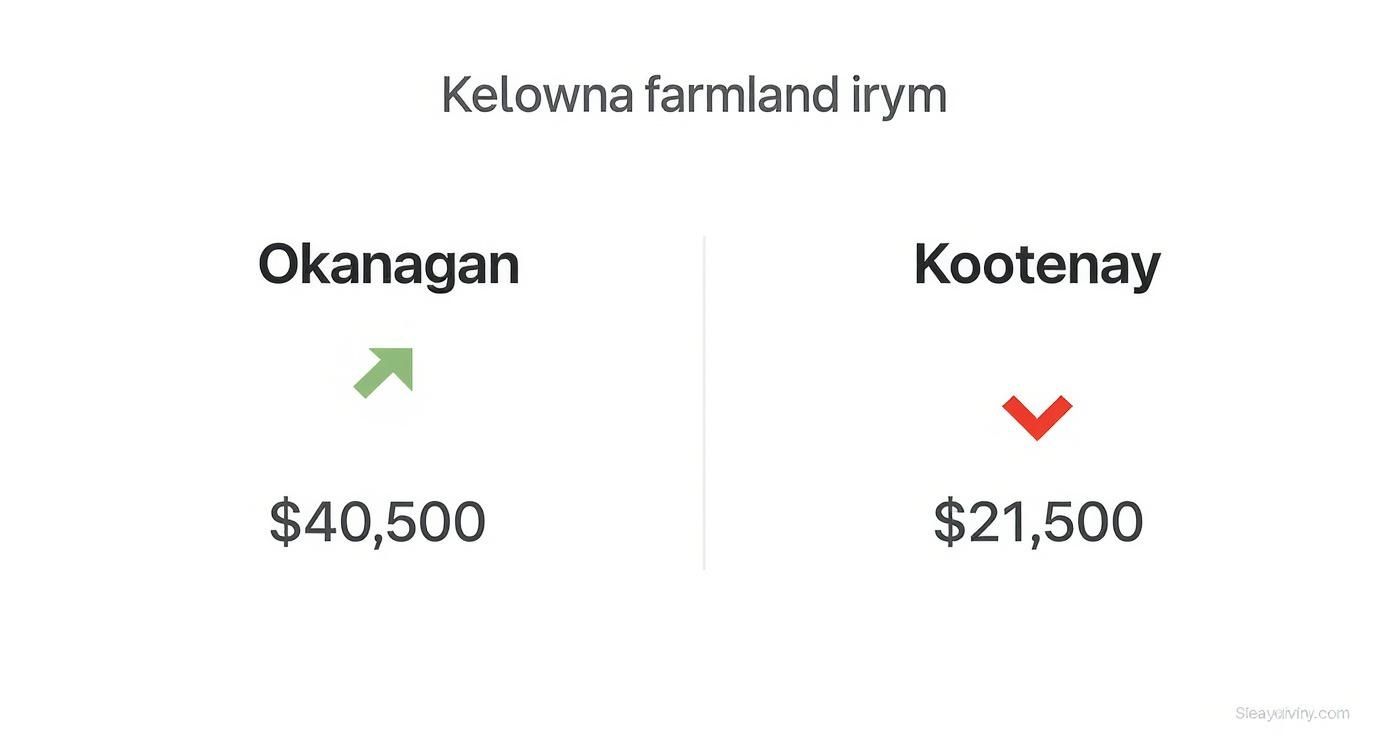
The significant price difference really underscores the intense desire for land in the Okanagan, driven by its unique blend of agricultural potential and an unbeatable lifestyle.
By taking the time to explore these different farm types, you can narrow your focus and start a targeted search for a farm for sale in Kelowna that truly feels like coming home.
Navigating Zoning, Water Rights, and the ALR
Alright, let's get into the nitty-gritty—but I promise to keep it straightforward. When you're looking at a farm for sale in Kelowna, terms like "ALR" and "water rights" are going to come up again and again. Getting a handle on them isn't just a good idea; it's absolutely crucial for making a sound investment.
Think of these regulations as the rulebook for your property. They dictate what you can build, what you can grow, and exactly how you can use your land. Getting clear on them now will save you a world of headaches and expensive surprises down the road.
Decoding the Agricultural Land Reserve (ALR)
First up is the Agricultural Land Reserve (ALR). This is a special provincial zone created in British Columbia specifically to protect valuable farmland from being swallowed up by non-agricultural development. If a property you're eyeing is inside the ALR, it comes with a very specific set of rules.
At its core, the primary purpose of ALR land is for farming. This simple fact impacts everything from building a second home for family to trying to subdivide a larger parcel. While there are some provisions for non-farm uses, the process is heavily regulated by the Agricultural Land Commission, and getting an approval is never a sure thing.
Understanding a property's ALR status is your first critical checkpoint. It sets the boundaries for your dreams and plans, ensuring what you envision for your farm is actually possible.
Never assume you can build whatever you want or launch a non-farm business just because you own the land. Verifying the specifics with the Agricultural Land Commission is a non-negotiable step in your due diligence process.
ALR vs Non-ALR Land Use Comparison
To help you see the key differences at a glance, here’s a simplified breakdown of what you can and can't do.
Land Use Aspect Within ALR Outside ALR
Primary Use | Farming and agriculture are prioritized and protected. | Subject to local municipal zoning (e.g., residential, commercial). |
New Homes | Strictly regulated, often limited to one primary residence. | Governed by local zoning, often allowing more flexibility. |
Subdivision | Extremely difficult and requires approval from the ALC. | Possible, but must conform to local subdivision bylaws. |
Non-Farm Use | Limited; activities like retail stores or venues require special permission. | Permitted based on the property's specific zoning code. |
This table really highlights how being inside the ALR puts agriculture first, while properties outside of it are governed by the more familiar city or district zoning rules.
Why Water Rights Are Non-Negotiable
Here in the sun-soaked Okanagan Valley, water is everything. You could find the most spectacular farm with perfect, loamy soil, but without secure water rights, its agricultural value plummets. It’s a common mistake to assume that a creek running through a property means you can use its water. That's not how it works here.
Water rights in British Columbia are licensed by the provincial government. When you buy a farm, you need to verify that a valid water license is attached to the property's title. Just as important, you have to confirm it provides enough water for what you plan to do, whether that's irrigating a ten-acre vineyard or watering your livestock. Given our hot, dry summers, learning about low-water landscaping and xeriscaping in the Okanagan can also provide some fantastic insights into water conservation.
Here’s a quick checklist of what to investigate:
Water Licence: Confirm there’s a current, registered water license for the property. No license, no water.
Source and Volume: Know exactly where the water comes from (a creek, lake, or well) and how much you're legally allowed to draw.
Irrigation Infrastructure: Take a hard look at any existing pumps, mainlines, and irrigation systems. An old, failing system can turn into a very expensive problem, very quickly.
Tackling these technical details head-on is one of the most powerful things you can do as a buyer. It transforms you from a hopeful dreamer into a truly informed investor, ready to find a farm for sale in Kelowna with total confidence.
Financing Your Farm Purchase and Tax Benefits
Figuring out how to pay for your dream farm isn’t quite the same as getting a mortgage for a house in town. It’s a completely different ball game, and lenders look at agricultural properties through a very specific lens. Understanding this from the get-go will save you a ton of time and put you in a much stronger position when you’re ready to make an offer.
When you’re looking at a farm for sale in Kelowna, lenders are focused on one main thing: the property's potential to generate income. This is a huge shift from a typical residential mortgage, where the spotlight is almost entirely on your personal finances and credit score.
Hobby Farm vs. Commercial Agricultural Loans
The first thing to sort out is which financing path you’re on. Lenders generally split farm loans into two main categories, and knowing where you fit is crucial.
Hobby Farm Mortgages: This is the route for smaller acreages where your primary goal is residential living, and any farming is more for personal enjoyment than for turning a significant profit. These loans are often handled by traditional banks and credit unions, and the process feels a lot more like a standard home mortgage.
Commercial Agricultural Loans: If your plan is to run a business—whether that’s a vineyard, an orchard, or a livestock operation—you'll need a commercial loan. Lenders who specialize in this world will want to see a rock-solid business plan and will dive deep into the farm’s viability as a commercial enterprise.
Getting pre-approved is one of the most powerful moves you can make. It tells you what you can afford, and it shows sellers you’re a serious, well-prepared buyer who can close the deal.
How Lenders See a Farm
Unlike a straightforward home loan, agricultural lenders get their hands dirty digging into the details of the property itself. They’ll be assessing everything from soil quality and water rights to the condition of the barns, shops, and other outbuildings.
Think of it this way: for a farm loan, the property itself is part of your application. Lenders need to be confident that the land can actually support your plans and be a productive, valuable asset.
This is exactly why having all your due diligence in order—like soil tests and water license verifications—is so important. It doesn't just protect you from a bad investment; it makes your financing application that much stronger. A well-researched property with a clear, realistic plan is far more attractive to a lender.
The Major Perk of Farm Status
One of the single biggest financial incentives for owning agricultural land in British Columbia is getting official farm status. This isn't just a title; it's a designation from BC Assessment that can dramatically slash your annual property tax bill.
To qualify, your land must be actively farmed, and you need to meet minimum gross income targets from selling your agricultural products. For properties under 2 acres, for example, you need to produce and sell at least $10,000 worth of farm products each year. The income threshold is lower for larger properties.
Once you have farm status, your property is assessed based on its agricultural value, which is almost always much, much lower than its market value for residential or development purposes. The tax savings can be massive, making your entire operation more financially sustainable for the long haul. Getting the financial side of your purchase sorted out early gives you the confidence to talk to lenders and truly understand the long-term benefits of your investment in the Okanagan real estate market.
Your Essential Due Diligence Checklist
So, your offer on the farm has been accepted. Congratulations! But now, the real homework begins. This is the due diligence phase, and for a farm property, it’s a whole different ball game compared to a typical home inspection. This is your one chance to get under the hood and make absolutely sure you know what you’re buying, so there are no costly surprises waiting for you after you get the keys.
Think of this as your personal playbook for making a solid investment. We’re talking about getting your hands dirty—literally—to confirm this piece of land can actually support your dreams. From testing the soil to walking every last fence line, this is how you buy a farm for sale in Kelowna with complete confidence.
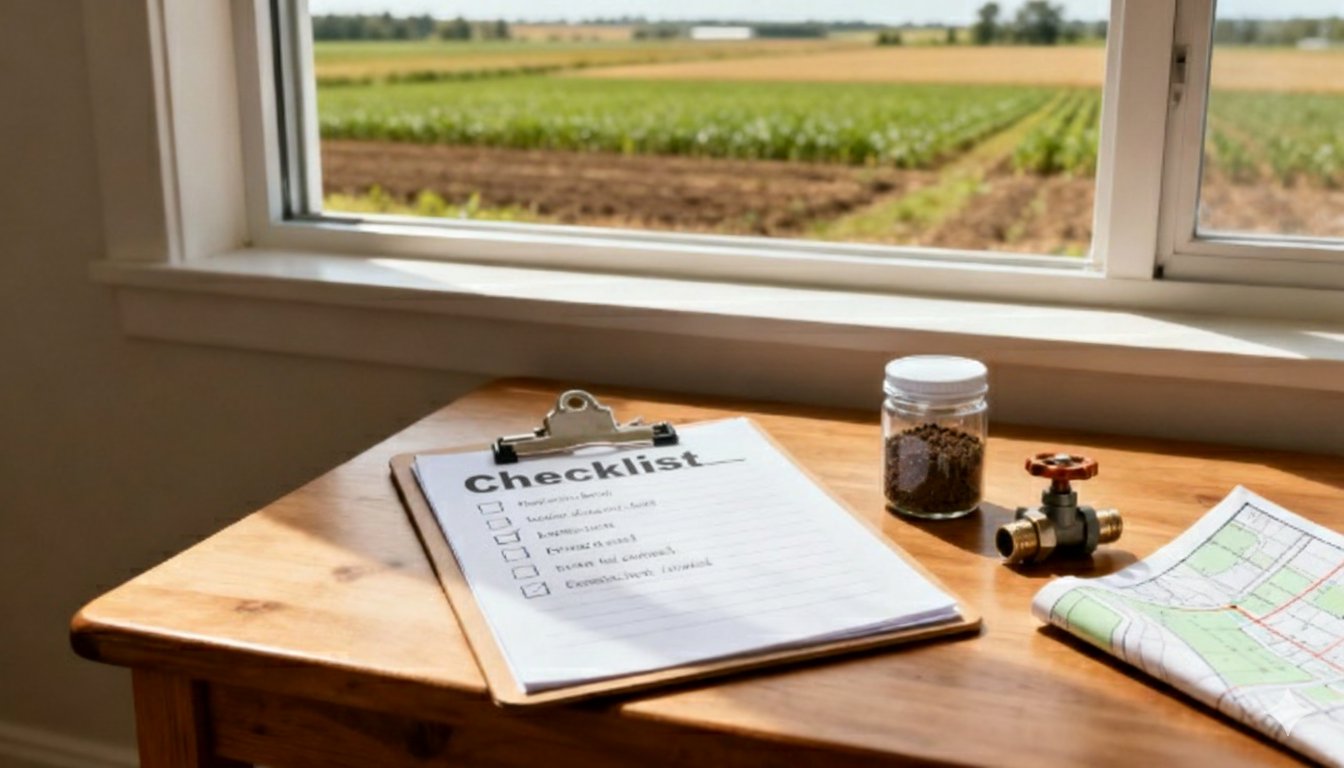
Land and Soil Assessment
Before you even think about what to plant, you have to understand the ground you're standing on. In farming, soil quality is everything, and it’s something you must verify for yourself.
Soil Quality Testing: Don't just take the seller's word for it. A professional soil test gives you the hard data on its composition, pH levels, and nutrient content. This information is non-negotiable for deciding if the land is right for your plans, whether you're dreaming of a vineyard or a bustling market garden.
Topography and Drainage: Put on your boots and walk the entire property. Keep an eye out for low spots where water might pool or slopes prone to erosion. Bad drainage can turn into a massive, expensive headache down the road.
Water and Irrigation Systems
We've said it before, and it’s worth repeating: in the Okanagan, water is gold. Now is the time to scrutinize every detail of the property’s water rights, supply, and the infrastructure that gets it where it needs to go.
Water Potability Test: If the farm has a well for drinking water, getting it tested for potability is a must. It's a standard step, but an essential one for your family’s health and safety.
Irrigation System Inspection: This isn't a DIY job. Hire a professional to go over the entire irrigation system with a fine-tooth comb. They'll check the pumps, mainlines, and delivery systems for leaks, damage, or major inefficiencies. An old, failing system can cost a fortune to fix or replace.
Buildings and Infrastructure Inspection
A farm is so much more than a house on a plot of land. The outbuildings—the barns, shops, and sheds—are the heart of the operation, and they deserve just as much attention as the main residence.
Your due diligence is about gaining a complete and honest picture of the property. A thorough inspection of barns, shops, and fences gives you clarity on immediate repair needs and helps you budget for future maintenance.
When you're inspecting the infrastructure, get a close look at:
Barns and Outbuildings: Are they structurally sound? Check for leaky roofs and make sure the electrical and plumbing are up to code and in good working order.
Fencing and Gates: Walk the perimeter. Is the fencing secure enough for the livestock you have in mind? Note any major gaps or sections that need immediate repair.
Property Boundaries: It’s always a smart move to have a surveyor confirm the property lines. This simple step can prevent complicated and costly disputes with neighbours later on.
Leases and Local Market Potential
Finally, look beyond the physical property and dig into its business potential. Many farms in the Central Okanagan have found huge success with direct-to-consumer sales, and understanding this local market is a major advantage. Be sure to find out if there are any existing agricultural leases on the land that you would be required to honour.
Finding Your Guide: Why a Niche Real Estate Expert is Non-Negotiable
Let's be honest, buying a farm in Kelowna is a whole different ball game. After everything we've walked through—from the maze of ALR regulations to the critical details of water rights and specialized financing—it’s clear this is a major move with a lot of unique, high-stakes pieces.
This is exactly why trying to go it alone can be a costly mistake. The single most important decision you'll make is choosing the right guide—an expert who lives and breathes agricultural real estate in the Okanagan. They're the one who can connect the dots between your vision and the dirt-under-your-fingernails reality of farm ownership.
The Specialist's Toolkit
An agent who focuses on rural and agricultural properties brings a completely different set of skills and resources to the table. They’re tuned into the rhythm of the local farm market and have a black book filled with essential contacts, from soil testers to the handful of lenders who truly understand farm financing. Most importantly, they know what red flags to spot from a mile away.
Here’s where their expertise really pays off:
Cutting Through Red Tape: They speak the language of zoning bylaws, ALR rules, and water licenses, saving you from disastrous and expensive missteps.
Seeing the True Value: A specialist looks past the farmhouse and assesses the land for what it really is—an agricultural asset. This ensures your offer is both competitive and smart.
Finding the Hidden Gems: The truth is, many of the best farm properties are sold before they ever appear online. A well-connected agent is your ticket to these off-market opportunities.
Choosing the right real estate partner is about bringing an advocate onto your team—someone who is genuinely invested in protecting your future and making sure your dream is built on solid ground.
Moving Forward with Confidence
You've made it this far, which means you're already armed with the foundational knowledge to begin your search. You know the right questions to ask, the crucial due diligence that can't be skipped, and the unique quirks of the Kelowna agricultural scene. Now, it's about putting that knowledge into practice with a team you can count on.
At Vantage West Realty, our entire approach is built on providing that clarity and rock-solid support. Led by AJ Hazzi, our team believes in straight talk, backed by hard data and years of firsthand experience in the Okanagan market. We're here to be your guide.
If you’re thinking about buying a farm for sale in Kelowna, Vantage West Realty can help you make your next move with confidence. Reach out to us today.
Sell Your House With Vantage West Realty
Sell your home on your own time with the Vantage West Guaranteed Home Sale Program.
if your home doesn’t sell in a mutually agreed upon timeframe, we’ll provide you with a guaranteed written offer.