



How to Negotiate a House Price in Kelowna: A 2025 Guide

AJ Hazzi, REALTOR®
After becoming a Realtor® in 2002, AJ Hazzi noticed a gap in the real estate market...
After becoming a Realtor® in 2002, AJ Hazzi noticed a gap in the real estate market...
When it comes to negotiating a house price in Kelowna, your success is almost always decided before you even make an offer. It comes down to a few critical actions: getting your mortgage pre-approved, diving deep into comparable home sales, understanding the pulse of the current market, and then crafting a strategic offer that balances price with conditions and dates.
This prep work gives you the data and the confidence to not just make an offer, but to secure a fair price. It can feel like a lot, but we're here to break it down for you.
Your Foundation for a Strong Negotiation
Walking into a negotiation unprepared is like trying to build a house without a blueprint. Before you even think about putting pen to paper on an offer, the real work begins behind the scenes. Building this rock-solid foundation gives you the confidence and leverage you need to succeed in the Kelowna real estate market.
It all starts with your finances. A casual chat with your bank is one thing, but a formal mortgage pre-approval is your golden ticket. This document tells sellers you’re not just browsing—you’re a serious, capable buyer who has already done the heavy lifting with a lender. When a seller sees that pre-approval, it immediately puts them at ease.
Think about it from their perspective. Whether they're in Penticton or West Kelowna, they want certainty. They need to know that the person making an offer can actually follow through and close the deal. A strong pre-approval removes that doubt and instantly strengthens your bargaining position.
Know What a Home Is Truly Worth
Once your financing is lined up, it's time to become a local market expert. The listing price is just a starting point; the real market value is what similar homes are actually selling for right now. This is where researching comparable sales, or "comps," is absolutely essential.
Your REALTOR® will pull data on recently sold homes that are a close match to the one you want in terms of size, age, condition, and location. We don’t just look at Kelowna as a whole; we get granular, analyzing specific neighbourhoods like Glenmore or the Upper Mission. This detailed approach is critical because a home's value can change dramatically from one community to the next.
What are we looking for in the comps?
Final Sale Price: What did buyers actually pay? This is the most important piece of data.
Sale-to-List Price Ratio: Did homes sell for over, under, or at the asking price? This tells you how much negotiating power buyers currently have. A ratio below 100% suggests there might be room to negotiate.
Days on Market (DOM): How long did it take for the property to sell? A home that’s been sitting on the market for a while could give you more leverage.
Having a solid grasp of the comps means your offer is based on facts, not feelings. It allows you to justify your price with hard data, making it much more difficult for a seller to simply dismiss it.
Partnering With the Right Expert
This groundwork can feel like a lot to take on, but you don't have to do it alone. The right real estate agent is your guide, your data analyst, and your chief negotiator all in one. They live and breathe the Okanagan real estate market every single day.
An experienced agent does more than just find you listings. They help you interpret the market data, understand a seller’s potential motivations, and structure an offer that is both compelling and protected. They're your advocate, ensuring you make smart, informed decisions from start to finish. If you're getting ready to buy, it's a good idea to learn about the key questions you should ask before hiring a real estate agent to ensure you have the best partner in your corner.
This prep work—getting pre-approved and understanding the true market value—is the foundation of every successful negotiation. With these pieces in place, you’re ready to move forward with clarity and strength.
Reading the Okanagan Market Signals
The Kelowna real estate market is always telling a story. If you can learn to read its signals, you'll know exactly when your offer should be firm and close to the asking price, or when you have room to be a little more conservative.
Every neighbourhood has its own unique rhythm, from West Kelowna right up to Vernon. Understanding that rhythm gives you a serious advantage at the negotiating table.

Is inventory high, giving buyers more homes to choose from and more room to negotiate? Or are homes getting snapped up in days, signalling a strong seller’s market? The answers are all in the data—data our team at Vantage West Realty lives and breathes every single day.
Key Metrics That Shape Your Strategy
To craft a smart offer, you need to look beyond the listing photos and the price tag. The real story is told through a few key market indicators. These are the numbers that reveal the current balance of power between buyers and sellers.
Here are the vital signs we track for every client:
Average Days on Market (DOM): This one is huge. If homes in a specific area like Lake Country are suddenly sitting for 45 days instead of the usual 20, it’s a clear sign that sellers might be getting anxious and more flexible on price. A rising DOM often points to a cooling market where buyers have more leverage.
Sale-to-List Price Ratio: This tells you how close sellers are actually getting to their asking price. If homes in Penticton consistently sell for 98% of list price, it suggests you have roughly a 2% negotiating margin. But if that number creeps up to 101%, it means you’ll need a much more aggressive strategy.
Months of Inventory: This metric reveals how long it would take to sell every home currently listed if nothing new came on the market. Four to six months is typically a balanced market. Less than four months favours sellers, while more than six gives buyers the upper hand.
Understanding whether you're in a buyer's or seller's market is fundamental. It changes everything about your approach, from your opening offer to the conditions you include.
Putting Local Data into Action
Let's walk through a real-world Kelowna scenario. You’ve found a great family home in Rutland. A quick look at the data shows that similar homes in the area have seen their average DOM climb from 25 to 50 days over the past three months. The sale-to-list ratio has also dipped to 97%.
What does this tell you? It tells you sellers' expectations might be a bit out of sync with the current market. They're likely becoming more motivated as their property sits unsold. This information gives you the confidence to come in with a well-reasoned offer below the asking price, backed by solid market evidence.
On the flip side, imagine you're eyeing a downtown condo where the inventory is just 1.5 months, and properties are selling for 102% of their list price. You know right away that a lowball offer will be dismissed without a second thought. In this case, your negotiation strategy might focus on other terms—like offering a quick closing date or a clean, condition-free offer—to make your bid stand out.
Learning to interpret these signals is a skill that comes with experience. For a deeper dive into how these dynamics work, you can explore our guide on recognizing the signs of a buyer’s or seller’s market. Having an expert on your side who lives this data daily ensures your negotiation strategy is perfectly aligned with the reality on the ground in the Okanagan, giving you the best possible shot at success.
Crafting a Compelling First Offer
Think of your first offer as the opening move in a chess match. You’re telling the seller you're a serious, organized buyer who can get the deal done. A well-crafted offer makes them want to work with you.
Getting this right is a balancing act. The price is obviously the headliner, but it's only one piece of the puzzle. How you handle the deposit, your conditions, and key dates can often make your offer shine brighter than a higher bid tangled up in complications.
Setting a Smart Offer Price
You’ve done the homework. You've analyzed the comparable sales and have a feel for the local market pulse. Now it’s time to put that research into a number. Your offer price should be a direct reflection of that hard work—competitive enough to get the seller’s attention, but anchored in the true market value of homes in that specific Kelowna neighbourhood.
Tossing out a lowball offer without a solid reason (like the property needing a new roof or a complete kitchen gut) can backfire spectacularly. You risk offending the seller and having them shut down negotiations before they even begin. Your agent is your guide here, helping you find that perfect sweet spot: a price that respects the seller's position while fiercely protecting your own financial interests.
The Power of a Strong Deposit
The deposit—that "good faith" money you submit with your offer—speaks volumes about your commitment. It's a tangible signal that you're ready to put your money where your mouth is.
While a deposit is often around 5% of the purchase price here in the Okanagan, stepping up with a larger amount can give you a serious edge. A beefier deposit sends two clear messages to the seller:
You're financially solid. It proves you have the cash on hand and aren't scrambling to make the numbers work.
You're serious about this property. With more "skin in the game," you’re far less likely to get cold feet, which is a huge relief for any seller.
Trust me, when multiple offers are on the table for a great house in West Kelowna or Penticton, a higher deposit can be the tie-breaker that seals the deal.
Your offer is a complete package. A seller doesn't just see a number; they see the deposit, the closing date, and the conditions. A strong combination of all these elements is what makes an offer truly compelling.
Beyond the Price Tag: Dates and Conditions
Everyone focuses on the price, but the real art of the deal often lies in the other terms. This is where you can get creative and make your offer irresistible. A clean, well-structured offer can easily beat a slightly higher price that’s loaded with complex conditions.
Here's where you can really strengthen your position:
Closing Date: This is the day you get the keys. Does the seller need to close quickly, or would they love a bit more time to organize their next move? We once helped a buyer in Lake Country beat out other offers simply by offering a longer closing that perfectly aligned with the seller’s new build timeline. Flexibility here is a massive bargaining chip.
Essential Conditions (Subjects): These are your safety nets. The two most common are a financing condition (giving your lender time to approve the mortgage) and a home inspection condition (allowing a pro to check for hidden issues). While dropping subjects can look attractive in a bidding war, it's a high-stakes gamble. Your Vantage West agent will help you weigh the risks against the rewards based on the property and your personal situation.
We’ve created a quick-reference table to break down the key parts of your offer and why each one matters in our local market.
Key Components of a Strong Offer
Offer Component Why It Matters Okanagan Pro-Tip
| Offer Price | The most visible part of your offer. It needs to be competitive but based on solid market data. | In a balanced market like Kelowna's, an offer close to asking price with strong terms is often more effective than a lowball. |
| Deposit Amount | Shows financial strength and commitment. A larger deposit can make your offer stand out. | Offering more than the standard 5% can be a powerful move, especially in desirable areas like the Lower Mission or Glenmore. |
| Closing Date | Flexibility can be a huge advantage. Aligning with the seller's timeline shows you're cooperative. | Ask your agent to find out the seller's preferred closing date. Matching it can make your offer far more appealing. |
| Financing Condition | Protects you if your mortgage application falls through. A pre-approval letter strengthens this. | Have your mortgage pre-approval ready. It tells the seller your financing is very likely to be approved, reducing their risk. |
| Home Inspection | Allows you to uncover potential issues and negotiate repairs or walk away. Crucial for older homes. | For newer builds or strata properties with good documentation, you might shorten the inspection period to be more competitive. |
| Other Conditions | Could include sale of your current home, reviewing strata docs, or confirming insurance. | Keep conditions to a minimum. A "clean" offer with fewer subjects is always more attractive to a seller. |
Ultimately, a seller’s motivation isn't always just about the final dollar amount. They often crave a smooth, predictable sale. A clean offer with a solid deposit and a convenient closing date gives them the certainty they’re looking for, setting the stage for a win-win negotiation.
Navigating Counteroffers Without the Stress
So, you’ve put together a solid offer. A day or two goes by, and your phone finally buzzes—it's your agent. The sellers have sent back a counteroffer.
That initial feeling might be a little bit of disappointment, but hang tight. A counteroffer is almost always a good thing. It’s an invitation to keep the conversation going. It means the sellers are serious, and you're in the game. The key is to take a breath, park the emotions, and look at their response strategically with your REALTOR®.
Reading Between the Lines
Every counteroffer tells a story. It gives you clues about what the seller really wants. Your job, with your agent, is to decode their priorities. Is it all about the money, or are other things just as important to them?
For instance, a seller might not budge on their price but happily agree to your preferred closing date. That tells you their moving timeline is their biggest pressure point. Or maybe they counter on price but ask to shorten the inspection window—a clear sign they want a quick, firm deal without any lingering uncertainty.
Figuring out their main motivation is your biggest advantage. It's how you find that sweet spot where everyone feels like they've won.
An offer is a package deal. Price, conditions, and dates are all levers you can pull.
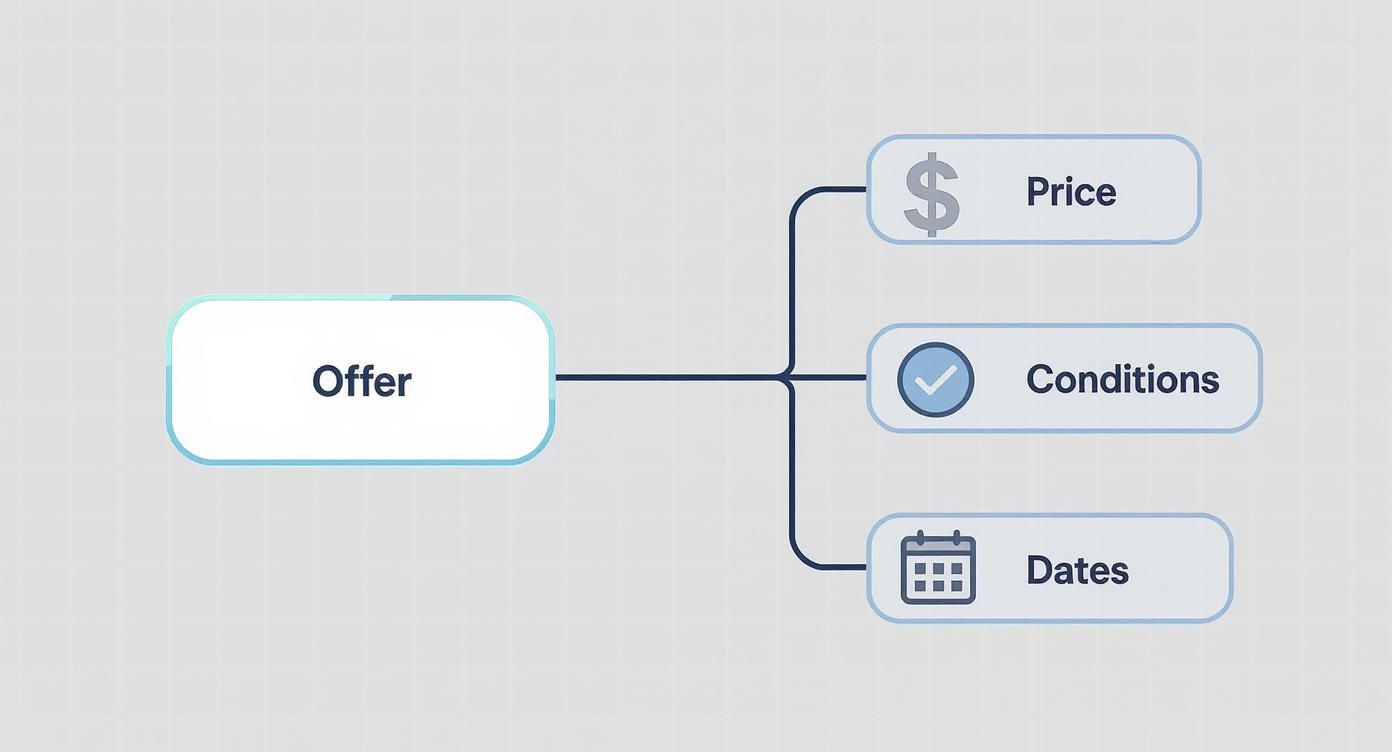
This just shows how everything is connected. A little give on one part can get you what you want on another.
Deciding Your Next Move
Once you have a good read on the seller's position, you’ve got a few ways to play it. This is about finding a path forward. At Vantage West Realty, we walk our clients through these scenarios every day, making sure the next step lines up with their ultimate goal.
Here are your options:
Accept the Counteroffer: If the new terms are reasonable and still fit your budget and timeline, you can sign off and pop the bubbly. The house is yours!
Reject the Counteroffer: If what they're asking for is just a non-starter, you have every right to walk away. No hard feelings.
Make a New Counteroffer: This is the most common route. You'll tweak one or two things to propose a new compromise.
Let's look at a real-world Kelowna example. We were recently working with buyers on a great family home in the Lower Mission. The sellers countered $15,000 higher than our client's initial offer. Instead of just splitting the difference on price, we dug a little deeper and found out the sellers were really stressed about moving their elderly parents.
So, we crafted a creative counter. We came up $7,500 on the price, but we also offered a super-flexible closing date and added a term allowing the sellers to rent the home back from our buyers for two weeks post-closing. This little tweak gave the sellers the breathing room and peace of mind they desperately needed. Our clients got the house for less than the seller's counter-price, and everyone left the table happy.
A successful negotiation is about understanding the other party’s needs and finding creative ways to meet them while achieving your own goals.
When to Hold Firm and When to Concede
Knowing when to stand your ground and when to be flexible is an art form. This is where having an experienced negotiator in your corner really pays off.
Hold Firm On: Your absolute non-negotiables. This means your maximum budget and your crucial protective conditions, like financing and a home inspection. Never compromise on your financial well-being or the due diligence that keeps you safe.
Offer a Concession On: The "nice-to-haves." Is your closing date flexible? Could you agree to a slightly shorter subject removal period to give the seller more certainty? Small gestures of goodwill can go a long way in showing you're serious about making the deal work.
This back-and-forth dance requires a steady hand and a clear head. By analyzing the seller's true motivations and thinking outside the box, you can turn their counteroffer into your accepted agreement.
Using The Home Inspection For Leverage
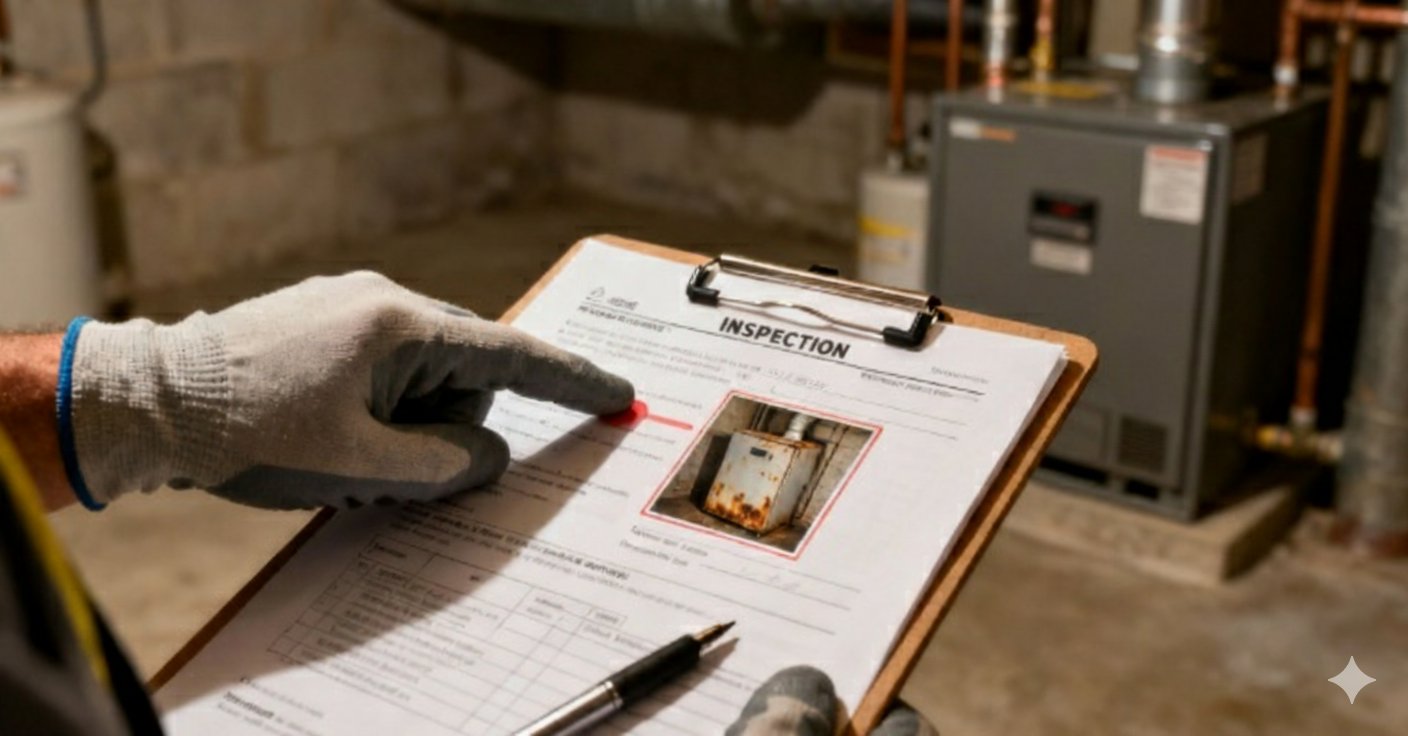
The home inspection is so much more than a simple safety check—it’s one of your most powerful negotiating tools. Think of it as a professional, unbiased look under the hood of the property, often revealing issues you’d never spot during a walkthrough. This is about protecting a massive investment.
When an inspector uncovers something significant, like an aging furnace in a Lake Country home or faulty wiring in a downtown Kelowna condo, the conversation shifts. Suddenly, you have documented proof of issues that will cost real money to fix. This is where a calm, strategic approach can save you thousands.
Deciding Your Negotiation Approach
Once that inspection report is in your hands, you and your Vantage West REALTOR® will go through it together to map out the best path forward. The real goal is to address the findings fairly without blowing up the whole deal.
Generally, you have three solid options on the table:
Request Repairs: You can ask the seller to hire a qualified professional to fix specific problems before you close. This works well for straightforward issues, but there's a catch—you have zero control over the quality of the work. Sellers are naturally motivated to find the cheapest fix.
Ask for a Price Reduction: This means lowering the agreed-upon sale price to account for the cost of future repairs. For example, if a roof replacement is estimated at $15,000, you might negotiate to drop the purchase price by that amount. It’s a great way to roll the savings directly into your mortgage.
Negotiate a Credit at Closing: This is often the most practical and cleanest solution. Here, the seller agrees to credit you a specific amount from their proceeds at closing, which can be used to cover your closing costs. This leaves you with cash in your pocket right after you get the keys, letting you hire the contractors you trust on your own schedule.
Your agent’s experience is absolutely crucial here. They’ll help you frame the request professionally, using the inspector’s findings and repair quotes to build a logical case that’s tough for a seller to simply dismiss.
Keeping The Big Picture In Mind
It's important to remember that no resale home is ever going to be perfect. The key is to focus on the significant issues—the ones that affect the home's safety, structure, or major systems. These are what we call the "big-ticket" items.
We're talking about things like:
Structural problems (like foundation cracks)
An old roof that’s on its last legs
Outdated electrical or plumbing systems
A furnace or A/C unit nearing the end of its life
Cosmetic flaws like scuffed paint or a leaky faucet are typically considered normal wear and tear. Trying to negotiate every minor imperfection can create bad will and put the entire deal at risk. Focus on what truly matters for your safety and long-term financial health in the home.
It’s also helpful to understand the seller's position and legal obligations. For more clarity on this, our guide on what repairs sellers are typically responsible for offers some valuable insights.
Having an experienced Vantage West REALTOR® in your corner during this phase makes all the difference. We know how to distinguish between major and minor issues, gather quotes from trusted Okanagan contractors, and present your requests in a way that protects your interests while keeping the negotiation positive and on track.
Knowing When to Walk Away
In any negotiation, your most powerful tool is your genuine willingness to walk away. This is about protecting yourself and making a smart, unemotional decision on what is likely the biggest investment of your life.
Sometimes, the best deal you’ll ever make is the one you don't take.
It’s easy to fall in love with a home in the Okanagan, but letting that emotion drive your financial decisions can lead to serious buyer's remorse. If you can’t land on a fair price backed by solid market data, or if an inspection uncovers a major problem the seller won’t fix, you have to be ready to move on.
Think of your Vantage West agent as your objective partner in this. We’re here to give you the data, the local context, and the clear-eyed advice you need when the cards are on the table.
Identifying the Deal-Breakers
Every buyer has a line in the sand. Before you even start looking at listings, it's a good idea to sit down and define what your absolute deal-breakers are. That clarity will be your anchor when negotiations get choppy.
Here are a few common red flags that should give you serious pause:
Major Inspection Surprises: We aren't talking about a dripping faucet. A cracked foundation, signs of past water intrusion in a Kelowna basement, or a roof that needs to be replaced yesterday are massive, costly problems. If a seller is unwilling to repair these or offer a fair credit, that’s a huge warning sign.
An Unbridgeable Price Gap: Let's say your research and the comparable sales show a home is worth $850,000, but the seller is dug in at their $925,000 asking price. You can't force a deal that isn't there. Overpaying in the heat of the moment just means you’re starting your homeownership journey underwater.
An Uncooperative Seller: A seller who is difficult, unreasonable, or just plain unresponsive during negotiations can be a preview of headaches to come. If they fight you on every minor point now, just imagine what will happen if a more significant issue pops up before closing day.
Sometimes the universe is trying to tell you something. If a deal feels like you’re constantly pushing a boulder uphill, it might just be a sign that a better, more suitable home is waiting for you around the corner in Penticton or West Kelowna.
The Emotional Toll vs. The Financial Cost
Walking away from a house you’ve already pictured your life in is tough. You’ve invested time, energy, and emotion into the process. It's completely normal to feel disappointed.
But that temporary feeling is far better than the long-term, grinding stress of a bad purchase.
Think of it this way: the short-term sting of starting your search over is a small price to pay to avoid years of financial strain from unexpected repairs or an overpriced mortgage. A few more months of looking is a much better alternative than a decade of regret.
Your Advocate and Your Exit Strategy
As your REALTOR®, our job is to protect your best interests, full stop. That means we're here to help you close a great deal, but it also means we're here to tell you when it’s time to cut your losses. We will never pressure you into a decision that doesn’t feel right.
We’ll review the facts with you one last time—the inspection report, the market data, the seller's final offer—and give you our honest, professional opinion. But at the end of the day, the decision is always yours. Our role is to make sure you feel confident and in control, whether that means heading to the closing table or heading back out to find an even better home.
Your perfect property is out there. We’ll help you find it, without compromise.
If you’re thinking about buying or selling in Kelowna, Vantage West Realty can help you make your next move with confidence. Reach out today.
Sell Your House With Vantage West Realty
Sell your home on your own time with the Vantage West Guaranteed Home Sale Program.
if your home doesn’t sell in a mutually agreed upon timeframe, we’ll provide you with a guaranteed written offer.