



Your 2025 Guide to Kelowna BC Land for Sale

AJ Hazzi, REALTOR®
After becoming a Realtor® in 2002, AJ Hazzi noticed a gap in the real estate market...
After becoming a Realtor® in 2002, AJ Hazzi noticed a gap in the real estate market...
Finding Kelowna BC land for sale is the first step toward building something that’s truly your own here in the Okanagan. Whether you're dreaming of a custom family home with sweeping lake views or scouting a strategic investment for the future, it all begins with a piece of dirt and a vision.
It’s an exciting path, but it can feel complicated. Let's break it down so you can move forward with confidence.
Your Dream Starts With The Right Piece Of Land
So, you’re thinking about building your dream in the Okanagan. That’s a huge step, and buying a parcel of land is a completely different ball game than buying a house. It’s totally normal to feel a mix of excitement and maybe a little bit of uncertainty.
This guide is your starting point. We'll walk through why so many people—from families sketching out their forever home to savvy investors hunting for their next project—are drawn to the Kelowna land market.
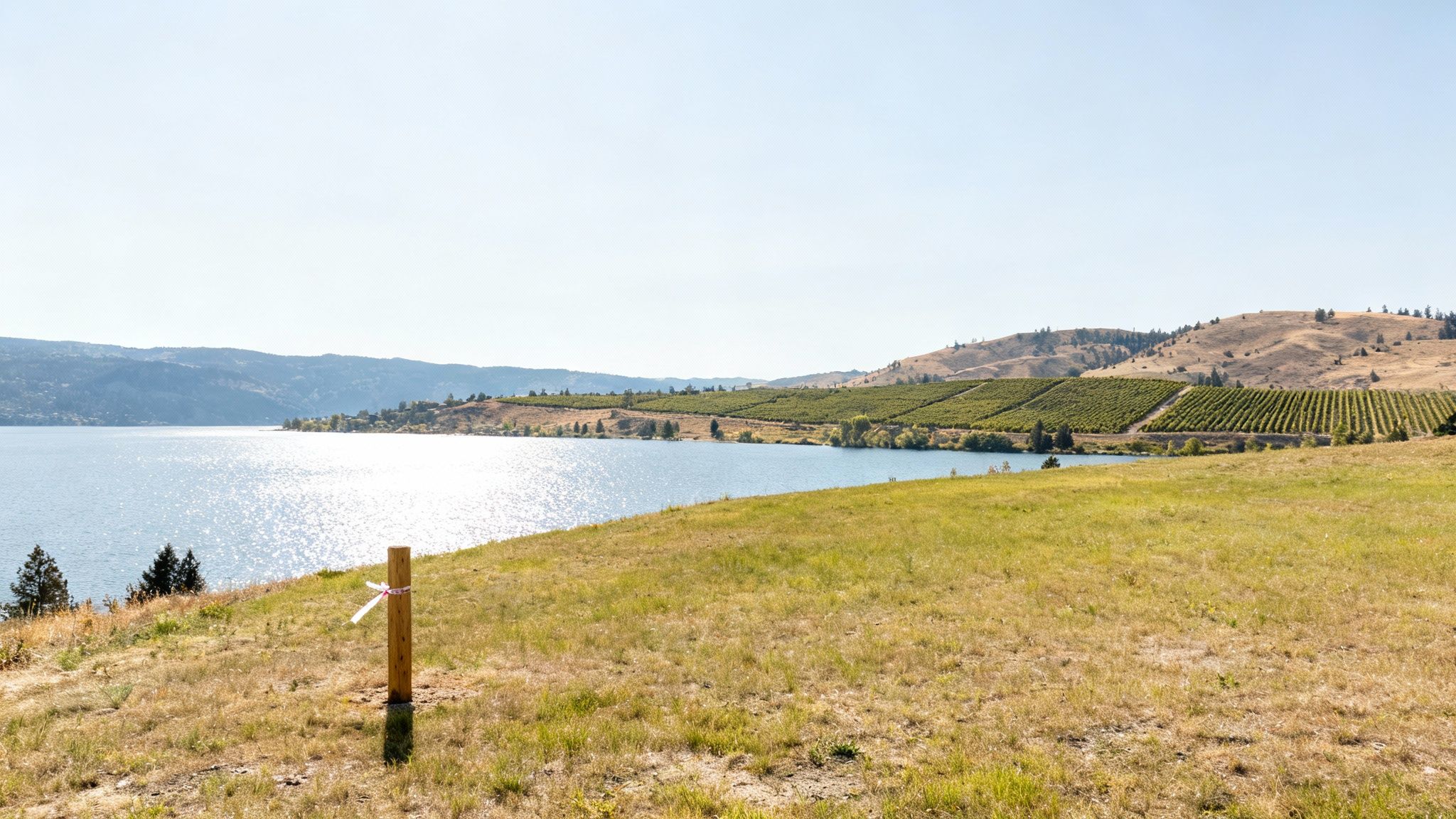
Uncovering Okanagan Opportunities
The Okanagan landscape offers an incredible variety of opportunities. What are you picturing?
A lakeside lot with stunning, panoramic views of Okanagan Lake.
A sprawling acreage out in a peaceful, rural setting like Ellison or Joe Rich.
An urban infill lot in a neighbourhood like Pandosy, perfect for a modern build close to everything.
A parcel with development potential for building a duplex or townhomes.
Each of these options brings its own lifestyle and list of things to consider. The real beauty of buying land is that you get to choose the backdrop for your future.
For many, purchasing land is about creating a legacy. It's a chance to build a space that perfectly fits your family's needs, reflects your personal style, and becomes a cherished home for generations to come.
Your Guide For The Journey Ahead
Think of this guide as your first friendly conversation about turning that vision into a real, tangible plan. Buying land involves more than just finding a great spot. You'll need to get your head around zoning, servicing, and financing in a way that’s very different from a typical home purchase. You can get a better sense of this by exploring our overview of the different types of lots for sale in Kelowna.
We're here to give you clear, honest advice every step of the way, making sure you feel confident and prepared. Our job is to simplify the process, giving you the insights and support needed to make a smart, informed decision. From understanding the Agricultural Land Reserve (ALR) to connecting you with trusted local builders, we’ve got your back.
Let's get started.
Understanding The Kelowna Land Market Today
So, what's really happening with land and property values across Kelowna right now? It’s a dynamic market, and getting a handle on the latest trends is essential if you want to make a smart move on Kelowna BC land for sale. The numbers can tell a story, but you need to know how to read between the lines.
A lot of people get hung up on property assessments, but they don’t always paint an accurate picture of what's happening on the ground. Think of an assessment as a snapshot taken months ago; the actual market is a live video, constantly shifting with supply, demand, and buyer confidence.
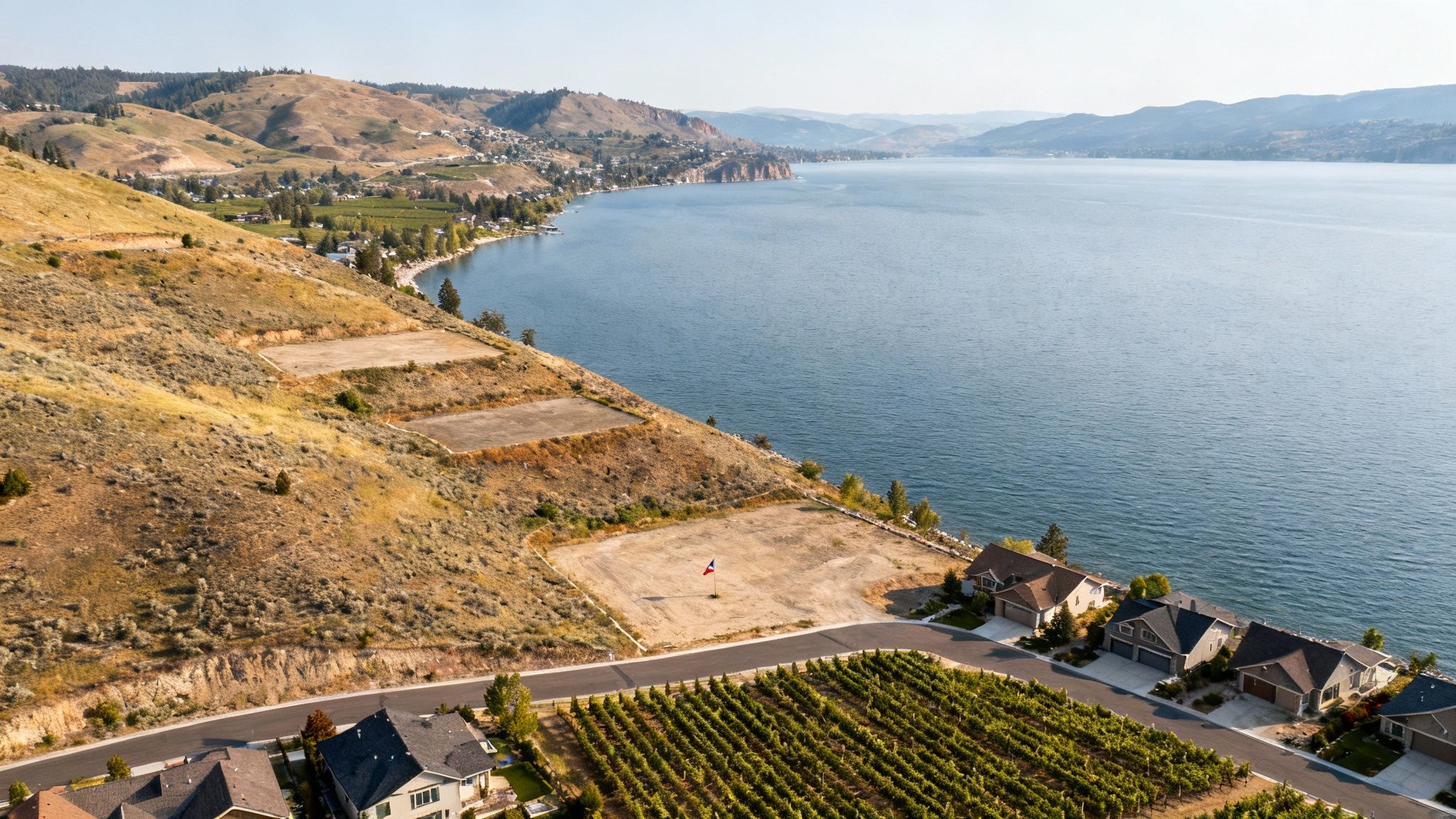
What Recent Assessments Really Mean
The official numbers have certainly shown some shifts. Take the 2025 BC Assessment for Kelowna: it saw typical single-family home values dip by about 2%, moving from around $938,000 down to $918,000. While that might sound like a big deal, it’s really more of a slight market correction after years of explosive growth.
The most important takeaway is that assessments are not the same as market value. Market value is what a ready and willing buyer will actually pay for a property today. This is especially true for unique and desirable parcels of land. For a deeper dive into these trends, check out our regular updates on the Kelowna real estate market.
A property's true value is determined by recent, comparable sales in the same neighbourhood—not by a number on a tax notice. Relying solely on assessed values can lead to overpaying for land or missing a great opportunity.
The Story Behind The Numbers
Let's look at a couple of real-world examples to see this in action. A gorgeous waterfront luxury home on Carrs Landing Road was recently assessed at $3.5 million. It sold in January 2025 for a staggering $5.8 million—a whopping 66% over its assessed value. This massive premium shows how scarcity and high demand for premium properties, like waterfront lots, create value that assessments just can't keep up with.
On the flip side, a family home in a fantastic West Kelowna neighbourhood near great schools sold for $945,000, which was just 5.5% above its assessed value. This tells us that while some market segments might be cooling off a bit, well-located family properties are holding their value incredibly well.
Key Factors Driving The Land Market
So, what’s keeping the market for land in Kelowna and the broader Okanagan so strong? It really boils down to a few core factors that continue to create opportunities for buyers and investors.
Consistent Demand: Families are still flocking to the Okanagan, drawn by the lifestyle, the weather, and the amazing community we all love. This constant influx of new residents creates steady demand for all types of housing, which always starts with the land it's built on.
Limited Supply: This is the big one. There's only so much buildable land in the valley, particularly in the most sought-after locations. The scarcity of key property types—like lake view lots, large acreages, or parcels zoned for multi-family projects—naturally keeps values high.
Lifestyle Appeal: The dream of building a custom home that perfectly matches a specific lifestyle is a powerful driver. Buyers are often willing to pay a premium for that perfect piece of land that allows them to create their ideal Okanagan retreat from scratch.
Understanding these underlying forces is far more useful than just looking at a percentage change in assessments. It helps you see where the real value lies and spot the opportunities that others might overlook.
Alright, let's get into the nitty-gritty of buying land—the part that can feel a bit like learning a new language. Don't worry, it's simpler than it looks. Every single piece of Kelowna BC land for sale comes with a set of city rules that says exactly what you can, and can't, build on it. This is called zoning, and it’s probably the most important detail you’ll dig into.
Think of zoning as the city's master plan for a neighbourhood. It’s what keeps a quiet residential street from suddenly getting a noisy factory as a new neighbour. Getting a handle on these codes is critical because they dictate everything, from how big your future home can be to whether you're allowed to run a small business from your property.
A quick check of the zoning can save you a world of headaches and potentially thousands of dollars. It’s the one step that confirms the land you’re falling in love with is actually the land you can build your dream on.
Understanding Kelowna's Zoning Language
When you start browsing land listings, you'll see codes like "RU1" or "A1" thrown around. These aren't just random letters and numbers; they're the official language of land use in Kelowna. Getting familiar with the most common ones will give you a massive advantage in your search.
For instance, if your dream is a classic single-family home with a big backyard for the kids, you’ll be hunting for land zoned as RU1 (Single Family Housing). This is one of the most common residential zones you'll find across the city.
But if you're drawn to those beautiful, sprawling acreages on the outskirts of Kelowna, you'll run into A1 (Agriculture 1) zoning all the time. This one is especially important because many of these properties are also part of the Agricultural Land Reserve (ALR), which has its own strict provincial rulebook about what you can build and how the land can be used.
Navigating the specifics of ALR land can be tricky. It often comes with tight limits on house size and what you can do on the property that isn't related to farming. You absolutely want an expert in your corner who gets these nuances to make sure your plans are realistic from day one.
The Most Common Zoning Codes You'll See
While the city has a long list of zoning bylaws, a handful pop up again and again in the Kelowna real estate market. Knowing what they stand for helps you quickly filter properties and focus only on the ones that actually fit your vision.
Here’s a quick look at some of the codes you'll see on land parcels:
RU2 - Medium Lot Housing: This zoning allows for slightly smaller lots than RU1. It's often a great option for generating rental income because it can permit homes with secondary suites or even duplexes.
RU4 - Low Density Multiple Housing: This is a key zone for investors eyeing development potential. It typically allows for projects like townhouses or small-scale multi-family buildings.
RR1 / RR2 - Rural Residential: You'll find these zones in more rural spots like parts of Ellison or Joe Rich. They allow for single-family homes on much larger lots, giving you way more space and privacy than you’d get in the city core.
Before you get too far down the road with a piece of land, it’s always a good idea to have a look at the City of Kelowna's official zoning map to see exactly what’s what.
Zoning codes can seem a bit cryptic at first glance, but they're just a shorthand for what the city envisions for that area.
Here's a table that breaks down some of the most frequent zoning codes you'll see on land listings in Kelowna and what they generally permit.
Common Kelowna Land Zoning Types Explained
Zoning Code Primary Use Common Locations Key Consideration
RU1 | Single-Family Housing | Most residential suburbs | The classic family home lot. Good for a primary residence, often with a suite. |
RU2 | Medium Lot Housing | Central Kelowna, Rutland | Allows for denser housing, like duplexes or homes with suites on smaller lots. |
A1 | Agriculture 1 | East Kelowna, South East Kelowna | Often within the ALR. Farm use is prioritized; strict rules on home size. |
RR1 / RR2 / RR3 | Rural Residential | Ellison, Joe Rich, Myra | Larger lots (acreages) for single-family homes. Great for privacy and space. |
RU4 | Low Density Multiple Housing | Areas slated for densification | Development potential for townhouses or small apartment buildings. |
This isn't an exhaustive list, but it covers the main players. Always double-check the specific bylaw details for any property you're serious about.
From Zoning To Building Permits
Okay, so you've found a lot and the zoning is perfect for your project. What's next? Before you can even think about putting a shovel in the ground, you'll need to work through the permitting process with the City of Kelowna.
This usually involves two key steps: securing a Development Permit and then a Building Permit.
The Development Permit is all about the "big picture." It looks at things like your building's overall design, where it sits on the lot, landscaping plans, and any environmental factors. It’s the city’s way of making sure your plan fits the neighbourhood's character. Once that's approved, you move on to the Building Permit, which gets into the nitty-gritty technical details of construction, ensuring everything is built safely and up to code. This whole process takes time, so be sure to factor that into your project schedule right from the start.
Calculating The True Cost Of Buying Land
When you're scrolling through listings for Kelowna BC land for sale, the price tag you see is really just the opening act. It’s easy to get excited about the sticker price, but we need to pull back the curtain on the full picture so you can plan your budget without any nasty surprises down the road.
It’s about understanding every dollar that goes into the project, from the moment you sign the contract to the day you break ground. Let's break it down.
Upfront Purchase Costs
Before you can even call the land your own, you'll face a few significant expenses. These are the immediate costs tied directly to the transaction itself, and they need to be factored into your initial budget from day one.
Property Transfer Tax (PTT): This is a big one in British Columbia. The PTT is a provincial tax calculated on the fair market value of the property. For a desirable parcel of land in the Okanagan, this can easily add up to thousands of dollars that are due upon closing.
Goods and Services Tax (GST): Often catching buyers by surprise, GST is frequently applicable to the sale of vacant land. This is especially true if it's being sold by a developer or has been recently subdivided. At 5%, it’s a substantial cost you absolutely must be prepared for.
Legal Fees: You'll need a lawyer or notary public to handle the title transfer and all the conveyancing paperwork. These fees cover their professional services, ensuring the sale is legally sound and your interests are fully protected.
This diagram shows how land is typically categorized for either residential or agricultural use, which directly impacts its potential, value, and the costs involved.
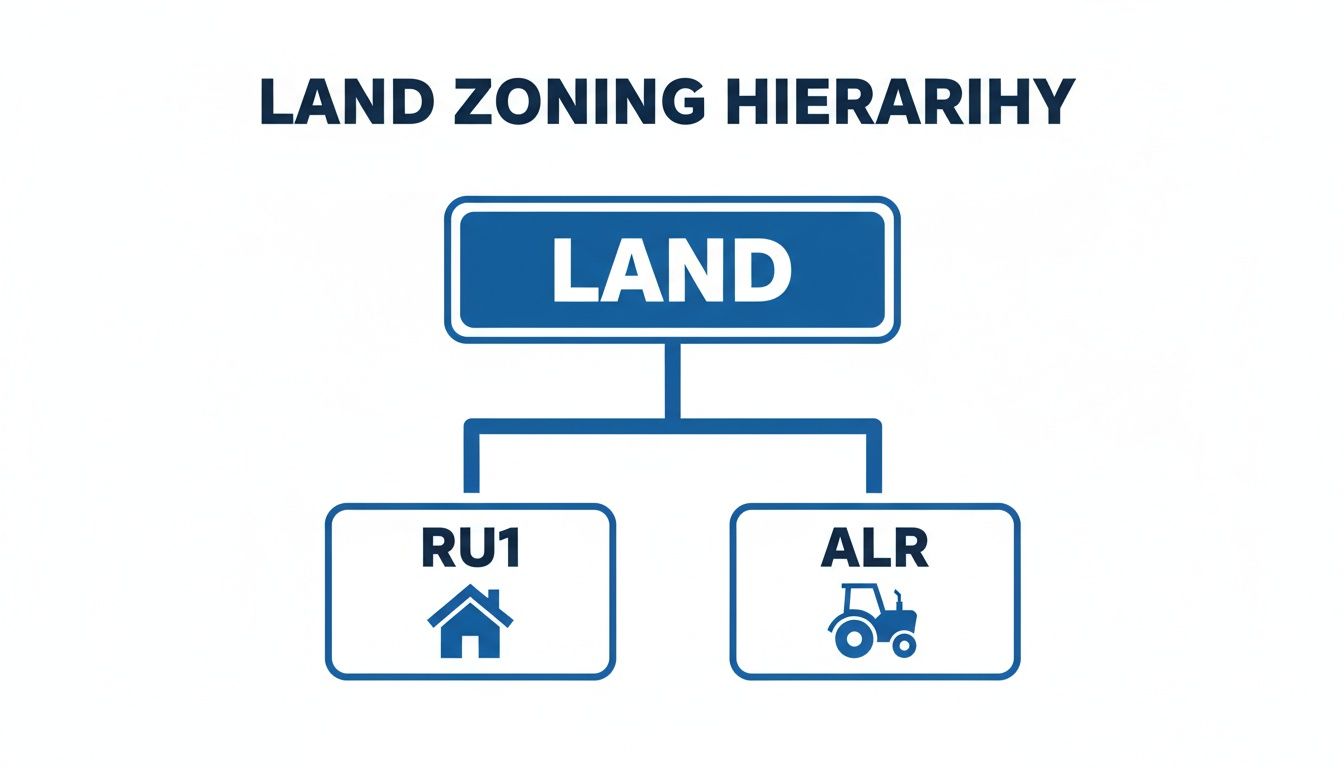
Knowing whether a lot is zoned for a single-family home (like RU1) or designated as ALR land for farming is the first critical step in forecasting its true potential and all the associated costs.
Soft Costs And Hard Costs
Once the land is officially yours, the next wave of expenses begins. We can group these into two main categories: "soft costs" for all the planning and design work, and "hard costs" for the actual physical construction.
Soft Costs (The Planning Phase)
These are the essential professional services required before a single shovel can hit the dirt.
Surveying: A BC Land Surveyor will be needed to officially mark your property boundaries and prepare a detailed site plan for your build.
Geotechnical Engineering: This is especially critical on our beautiful but tricky Okanagan hillsides. A geotechnical report assesses soil stability and provides essential recommendations for your foundation design.
Architectural and Design Fees: This covers hiring an architect, designer, or draftsperson to create the blueprints for your future home.
Permit Fees: The City of Kelowna requires fees for both development and building permits, which can vary significantly based on your project's scale and complexity.
Hard Costs (The Building Phase)
These are the tangible, physical costs of construction. Think of everything from excavation and pouring the foundation to framing, roofing, plumbing, electrical, and all the interior finishes. These costs will make up the largest portion of your overall budget after the initial land purchase.
Carrying Costs And Financing
The expenses don't stop once the deal is closed. While you're navigating the planning and building phases—a process that can take many months or even years—you'll have ongoing carrying costs to manage. These typically include annual property taxes and the payments on your financing.
It’s important to remember that financing raw land is a different ball game than getting a mortgage for an existing house. Lenders often see it as a higher-risk loan and may require a much larger down payment, sometimes as much as 25-35% or more.
A land loan is specifically used to purchase the lot itself. Then, a construction mortgage is a separate product that provides funds in stages (or "draws") as your build progresses and hits certain milestones.
Working with a mortgage broker who really understands these specialized loans is key. They can help you structure your financing in a way that aligns with your project timeline and cash flow, ensuring you have the capital you need at each critical stage of the build.
Your Due Diligence Checklist For Buying Land
Doing your homework before you sign on the dotted line is the single most important step in the entire land-buying process. Think of this as your safety net—that crucial phase where you protect your investment by uncovering any potential red flags early on.
It’s all about moving forward with peace of mind, knowing you’ve covered all your bases. Let's walk through the ultimate due diligence checklist for anyone looking at Kelowna BC land for sale.
Confirming Access To Essential Services
You'd be surprised how often this gets overlooked. Never just assume a property has straightforward access to utilities. Verifying service connections should be one of the very first things you do.
Water Source: Is the lot connected to the municipal water supply, or will you need to drill a well? If a well is the only option, you've got to investigate drilling costs and the likelihood of finding a good water source.
Sewer or Septic: Does the land tap into the city’s sewer system? If not, you need to find out if the soil is suitable for a septic system, which means getting a percolation (perc) test done. A failed perc test can literally render a lot unbuildable.
Electricity, Gas, and Internet: How far away are the nearest connection points for electricity and natural gas? The cost to extend these services can be shocking, sometimes running into the tens of thousands of dollars depending on the distance.
Understanding The Ground Beneath Your Feet
The beautiful, rolling hills of the Okanagan make for stunning views, but they also demand a closer look at what’s happening underground. The stability of the land is a non-negotiable part of your research.
A geotechnical report, prepared by a qualified engineer, is your best friend here. This report digs into the soil composition, slope stability, and groundwater conditions. It will tell you flat out if the land is safe to build on and provide critical recommendations for your foundation design, which is essential for preventing major issues down the road.
In a region with varied terrain like ours, a geotechnical report isn't just a "nice-to-have"—it's a critical piece of the puzzle. It ensures your dream home is built on a solid foundation that's right for the specific conditions of your lot.
Title Search And Legal Encumbrances
Every property comes with a history, and it's all recorded on its legal title. A thorough title search is an absolute must to uncover any legal details that could throw a wrench in your plans.
This is where you'll discover things like rights-of-way or easements. A right-of-way might give a utility company or a neighbour the legal right to cross a portion of your property. An easement could grant specific usage rights, like for a shared driveway. These can seriously limit where you can build on your lot, so it's vital to know about them upfront. Understanding the ins and outs of this process is crucial, which is why we've put together a guide explaining what title insurance is and why you need it.
Kelowna's real estate market continues to show incredible resilience. For example, market data for early 2025 shows persistent demand, driven by a chronic undersupply of single-family homes and strong family migration. Even with a slight 2% dip in single-family assessments to $918,000, real sales in desirable areas like Shannon Lake are fetching prices well over assessed value, proving that location and due diligence are key to securing a valuable asset.
By diligently working through this checklist, you can move from feeling uncertain to feeling completely confident in your purchase. It's about transforming a piece of raw land into a tangible, secure foundation for your future.
Finding The Right Partner For Your Land Purchase
Buying a piece of land in Kelowna isn’t some weekend DIY project—it’s a specialized field that demands real, on-the-ground expertise. Having a dedicated partner who lives and breathes the local land market can be the single biggest difference between a smart investment and a very costly mistake.
Working with a REALTOR® who truly gets the nuances of Kelowna BC land for sale is absolutely critical. A genuine land specialist does a lot more than just send you listings. They’re the ones who can uncover off-market opportunities you’d never find otherwise, help you decipher the maze of complex zoning bylaws, and connect you with a trusted network of local pros, from surveyors and geotechnical engineers to the right builders for your vision.
The Vantage West Partnership Approach
Here at Vantage West Realty, we don't just see ourselves as agents; we're your partners in this process. Our approach is built on a foundation of authenticity and deep local knowledge because we know exactly how much is on the line when you’re making a decision of this magnitude. Led by our founder, AJ Hazzi, our team brings data-driven insights and years of experience to the table to guide you through every single step.
Our job is to help you make a smart, informed decision that lines up perfectly with your long-term goals. We’re here to make sure that land is the right foundation for your future.
“Choosing the right agent is the most critical first step. You need someone who has navigated the specific challenges of land acquisition in the Okanagan—from ALR restrictions to hillside building requirements. Their experience becomes your advantage.”
This means you get straight talk from us, always backed by real data and hands-on experience. We’re committed to making sure you feel supported and confident, from your very first search to the moment you sign the final papers.
Experience That Delivers Results
Our track record speaks for itself. With over 1,000 five-star reviews from clients all over the Okanagan, we’ve built a reputation for delivering results through proven strategies and an unwavering commitment to our clients' success. We don’t just help you buy land; we empower you with the clarity and confidence to build your dream.
Whether it’s analyzing soil reports or negotiating with developers, our role is to be your staunchest advocate and your expert guide. We believe in total accountability, providing clear advice and dependable service you can count on. Your vision is our mission, and we have the expertise to help you bring it to life on the perfect piece of Okanagan soil.
Common Questions About Buying Land In Kelowna
We get it—jumping into the world of Kelowna BC land for sale opens up a ton of questions. It's a whole different ball game compared to buying a house, with its own unique playbook. To give you a head start, we've pulled together answers to the most common questions we hear from clients looking to buy land in the Okanagan.
How Much Do I Need For A Down Payment On Land?
This is usually the first thing people ask, and for good reason. Financing a raw piece of dirt isn't like getting a mortgage on an existing home. From a lender's perspective, it's a riskier investment, and that means you'll need more skin in the game.
You should be ready for a down payment requirement of anywhere from 25% to 35% of the purchase price. In some cases, depending on the property's location and what it's zoned for, it could be even more. Your best first step is to connect with a mortgage broker who specializes in land loans and construction financing. Do this early. It will save you a lot of headaches later.
Does GST Apply To Land Sales?
Often, yes—and it's a massive cost you absolutely need to factor into your budget. The 5% Goods and Services Tax (GST) is a common feature in vacant land sales, especially if you're buying from a developer or the lot was recently created through a subdivision.
But there are exceptions. For instance, if you’re buying a "used" residential lot from a private individual where a house used to stand, GST might not apply. The key is to never assume. Always get your REALTOR® and your lawyer to confirm the GST status to avoid a very expensive surprise on closing day.
One of the biggest mistakes we see buyers make is underestimating the total cash they'll need to close the deal. It's not just the down payment. You have to account for the Property Transfer Tax, legal fees, and potentially GST, all of which can add up in a hurry.
Can I Build Whatever I Want On My Property?
The short answer is a definite no. Every single parcel of land in Kelowna and the surrounding municipalities is subject to specific zoning bylaws. These rules dictate exactly what you can build, how big it can be, and even where it has to sit on the lot.
For example, a property within the Agricultural Land Reserve (ALR) comes with strict provincial rules on home size and land use that are worlds away from what's allowed on a residential lot in the Lower Mission. Digging into the zoning regulations and checking for any existing covenants or easements is a non-negotiable step before you even think about making an offer. This is the only way to be sure your vision for the property is actually possible.
If you’re thinking about buying or selling land in Kelowna, Vantage West Realty can help you make your next move with confidence. Reach out today.
Sell Your House With Vantage West Realty
Sell your home on your own time with the Vantage West Guaranteed Home Sale Program.
if your home doesn’t sell in a mutually agreed upon timeframe, we’ll provide you with a guaranteed written offer.