



What to Look for When Buying a House: Your 2025 Kelowna Guide

AJ Hazzi, REALTOR®
After becoming a Realtor® in 2002, AJ Hazzi noticed a gap in the real estate market...
After becoming a Realtor® in 2002, AJ Hazzi noticed a gap in the real estate market...
Buying a home is one of the biggest financial decisions you’ll ever make, especially in the beautiful but competitive Okanagan real estate market. It’s an exciting milestone, but it can also feel overwhelming. You’re not just looking for a place to live; you're making a significant investment in your future.
From the vibrant neighbourhoods of Kelowna to the serene shores of Lake Okanagan, the perfect home is out there. Knowing what to look for when buying a house is the key to finding it. This guide is your straightforward, comprehensive checklist designed to cut through the noise. We'll give you the confidence to evaluate properties like a pro, whether you're a first-time home buyer or a seasoned investor.
Think of us as your trusted partner, here to simplify the complex process of finding Kelowna homes for sale. We've distilled our experience into the 10 most critical factors every buyer should consider, from structural integrity to neighbourhood growth potential. This is the expert advice you need to make a smart, informed move you’ll be proud of for years to come. Let’s get started.
1. Location and Neighbourhood Quality
When you're figuring out what to look for when buying a house, nothing tops the age-old rule: location, location, location. In the Okanagan, a great address is about more than a view of the lake; it’s about your daily life and your home's future value. The right neighbourhood in Kelowna, Penticton, or Vernon has a direct impact on everything from your commute to your weekend plans.
For example, a young family might choose a home in Crawford Estates for its spacious lots and top-tier elementary schools. A professional couple might opt for a downtown Kelowna condo to be steps from restaurants and the waterfront. And retirees often gravitate to West Kelowna for its incredible lake views and proximity to world-class wineries. Each choice reflects a specific lifestyle.
How to Evaluate a Neighbourhood
Visit at different times: Drive through a potential neighbourhood like Glenmore during the morning rush hour and again on a Saturday afternoon. This gives you a real feel for traffic, noise levels, and the community vibe.
Talk to the locals: If you see people out walking, strike up a conversation. Ask them what they love about living there and what the drawbacks are. You'll get honest insights you won't find online.
Look to the future: Check the City of Kelowna's website for future development plans. A quiet area today might be slated for major construction tomorrow.
Think long-term: Consider your 5 to 10-year plan. Will the neighbourhood still fit your needs if your family grows or your career changes? Understanding the community's safety and amenities is key. For a deeper dive into this, you can learn more about Kelowna's safest neighbourhoods.
2. Structural Integrity and Home Inspection
Beyond the beautiful finishes and lake views, the "bones" of a house are what truly matter. When considering what to look for when buying a house, a professional home inspection is your best tool to uncover the real condition of a property in the Okanagan. It’s an impartial, in-depth look at everything from the foundation to the roof, protecting you from expensive surprises down the road.
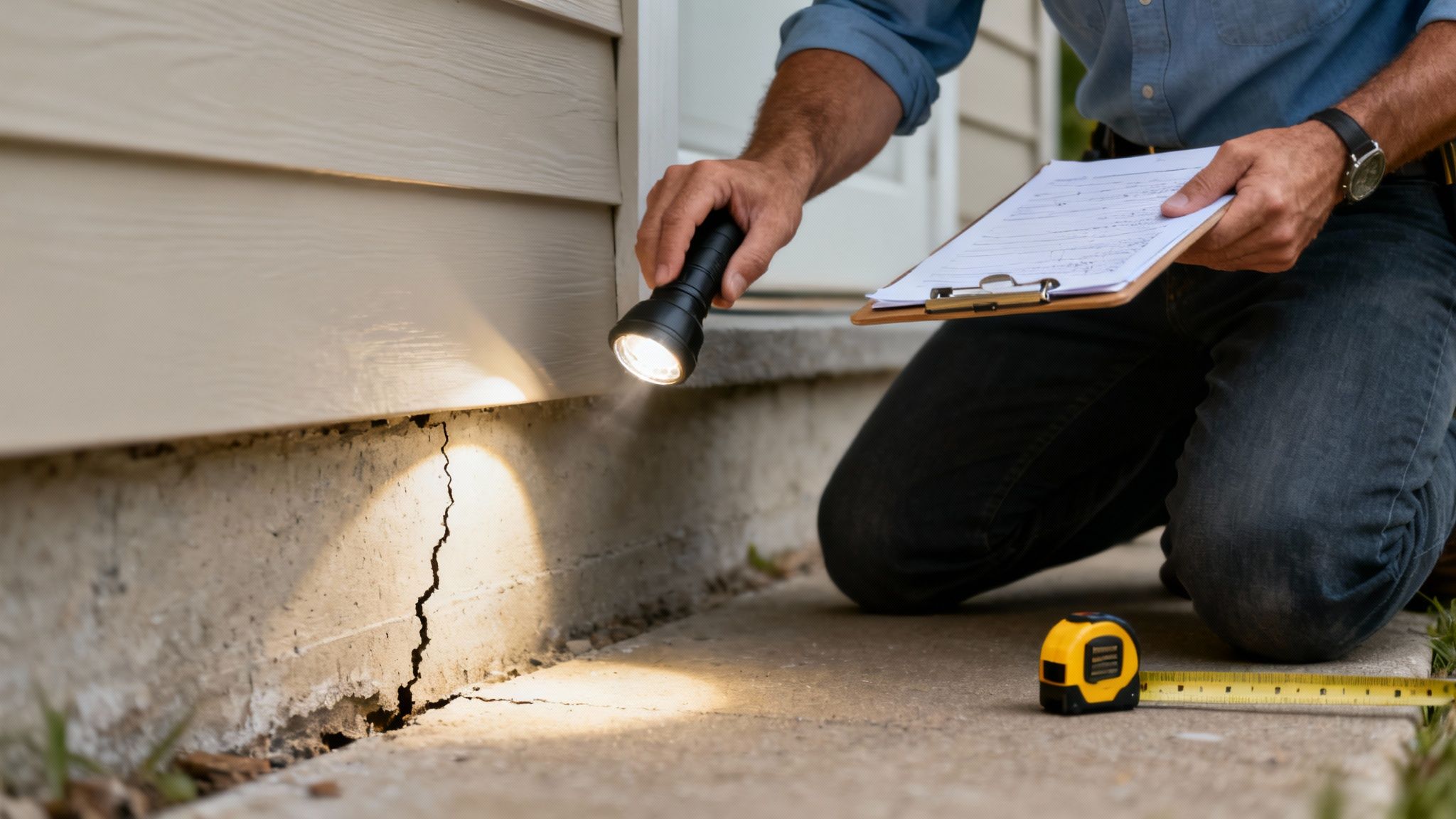
For example, an inspection might reveal that a charming heritage home in Penticton has outdated electrical wiring, posing a safety risk. Or, a modern West Kelowna home could have subtle foundation cracks indicating a future repair bill of over $15,000. These findings give you powerful leverage to negotiate repairs or a lower price, or even to walk away from a bad investment.
How to Evaluate a Home's Condition
Hire a certified professional: Always choose a reputable, certified home inspector. They have the training and experience to spot issues you might miss.
Attend the inspection: Be there in person. Walking through the property with the inspector allows you to see issues firsthand and ask critical questions about the remaining lifespan of major systems like the furnace and roof.
Get a detailed report: Your inspector should provide a comprehensive written report with photos and clear explanations. This document is crucial for negotiations and for your future maintenance planning.
Consider specialized inspections: If you have concerns about pests, mould, or radon, it’s wise to get separate, specialized inspections for peace of mind.
3. Price, Affordability, and Financing Options
When you're considering what to look for when buying a house, understanding your budget and financing is the critical first step. It's about more than just the sticker price on a home in Penticton or West Kelowna; it's about the long-term financial health of your household. Getting your finances in order ensures you can comfortably manage your mortgage and all the other costs of homeownership.
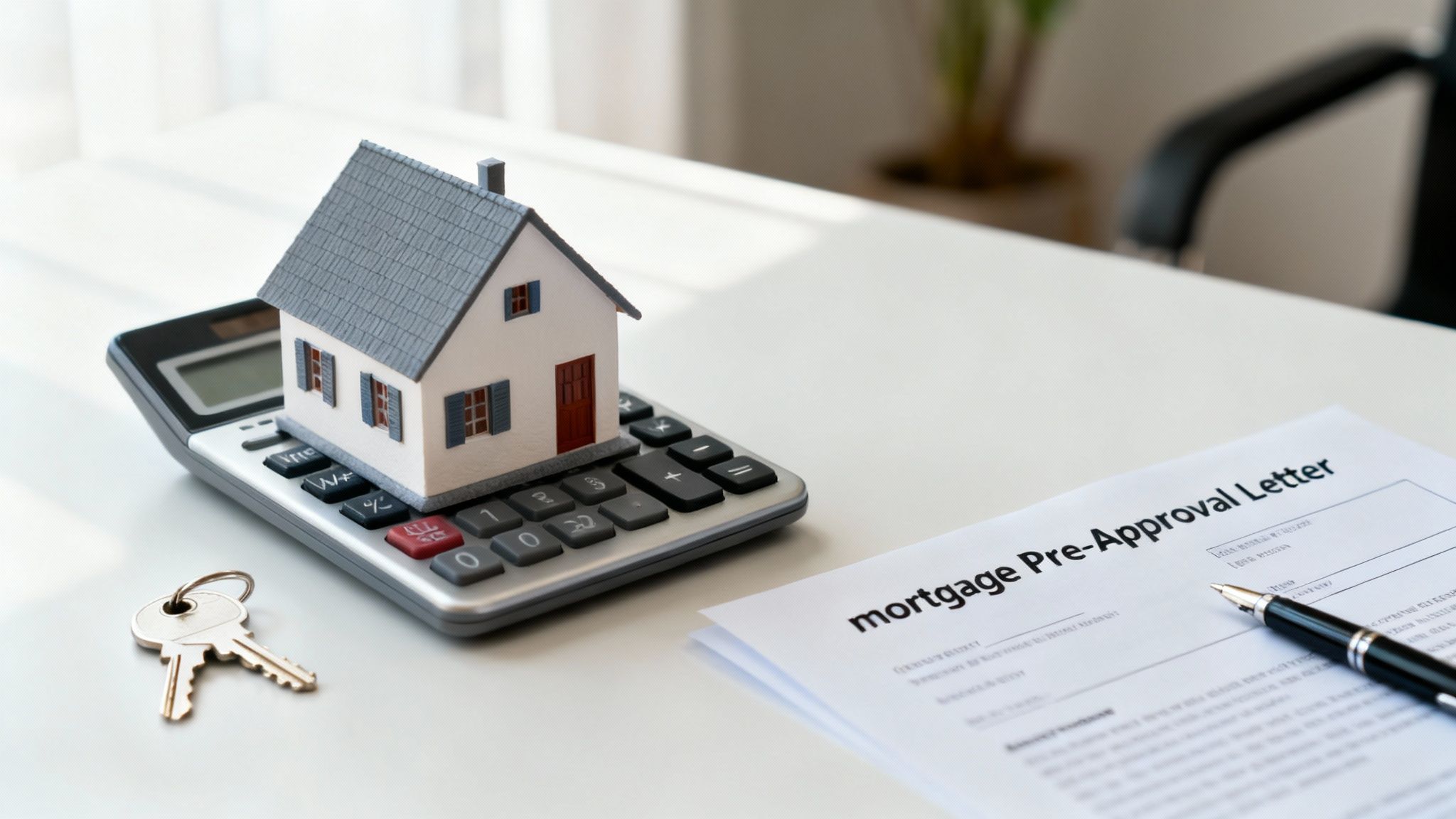
A $600,000 home in Kelowna might seem attainable, but the total cost includes property taxes, insurance, and potential strata fees. A first-time buyer might need a high-ratio insured mortgage to secure a property with a smaller down payment. Choosing the right financial path is key to a successful purchase, and that’s where getting solid advice makes all the difference.
How to Evaluate Your Financial Readiness
Get Pre-Approved First: Before you even start browsing listings, talk to a mortgage broker. A pre-approval letter shows sellers you're a serious buyer and gives you a firm budget to work with.
Explore Loan Options: Don't settle for the first offer. Compare rates and terms from multiple lenders to find the best fit for your situation.
Calculate the True Cost: Your monthly payment isn't just the mortgage. Add in estimated property taxes, home insurance, utilities, and a buffer for maintenance (a good rule of thumb is 1% of the home's value annually).
Aim for 20% Down: While not always possible, a 20% down payment helps you avoid mortgage loan insurance, lowering your monthly costs. To get a clearer picture of what you can afford, you can learn more about calculating your home affordability.
4. Property Size, Layout, and Functionality
Beyond the location, what to look for when buying a house comes down to how the home actually lives. The property's size, floor plan, and overall functionality determine if it truly suits your lifestyle. A beautiful home in the Mission with a choppy, closed-off layout might feel less practical than a smaller, well-designed home in Rutland.
For instance, many Okanagan families now prioritize an open-concept kitchen and living area for daily connection. Others, adapting to remote work, need a dedicated home office that isn't just a corner of the master bedroom. Thinking about these day-to-day needs is essential, as a layout that works against you can be a constant source of frustration and is often expensive to change.
How to Evaluate a Home's Layout
Project your future needs: Think 5-10 years ahead. Will you need a main-floor bedroom for aging parents, or a flexible bonus room for growing kids? A home that works today must also work for your tomorrow.
Walk it like you own it: During a showing, mentally place your furniture. Does your king-sized bed fit in the master? Is there a logical spot for the TV and sofa? This simple exercise reveals a lot about a room's usability.
Assess the flow: Move from room to room. Consider bringing in groceries, entertaining guests, or getting ready in the morning. A layout with a natural, easy flow makes daily life smoother.
Don't forget storage: Check for closets, pantry space, and garage storage. A lack of storage, common in some older Glenmore homes, can quickly lead to clutter and chaos. A functional home has a place for everything.
5. Age of Home and Major System Replacements
When you're evaluating what to look for when buying a house, the property's age offers crucial clues about its future costs. An older home's charm in Kelowna's historic districts can be undeniable, but it's important to understand the lifespan of its core components. The age of the roof, furnace, and plumbing directly impacts your long-term budget.
For instance, a charming mid-century home in the South Pandosy area might need significant electrical updates to meet modern safety standards. In contrast, a newer build in a developing West Kelowna neighbourhood likely comes with systems that are still under warranty, saving you from immediate replacement costs. Knowing the "big ticket" items' ages helps you budget for maintenance versus unexpected, expensive surprises.
How to Evaluate a Home's Major Systems
Ask for documentation: Request receipts and warranty information for any major system replacements, such as a new furnace, roof, or hot water tank. This provides a clear timeline of the home's maintenance history.
Factor in replacement costs: Be aware of typical replacement costs in the Okanagan. A new roof can range from $8,000-$25,000, and a new HVAC system could be $5,000-$15,000. These figures are vital for your financial planning.
Check the electrical panel: In homes built in the 1970s or 80s, outdated electrical panels can be a safety hazard and may not support modern power demands. A home inspection will identify this.
Verify builder warranties: For homes less than 10 years old, find out what is covered under the new home warranty. This often includes major structural components and can provide significant peace of mind.
6. Outdoor Space, Lot Size, and Landscaping
When you're considering what to look for when buying a house, the property's exterior is just as important as its interior. In the Okanagan, outdoor living is a huge part of the lifestyle. The right yard, patio, or deck can dramatically enhance your enjoyment of your home and add significant value. A well-designed outdoor space is an extension of your living area, perfect for summer barbecues, gardening, or simply relaxing with a view.
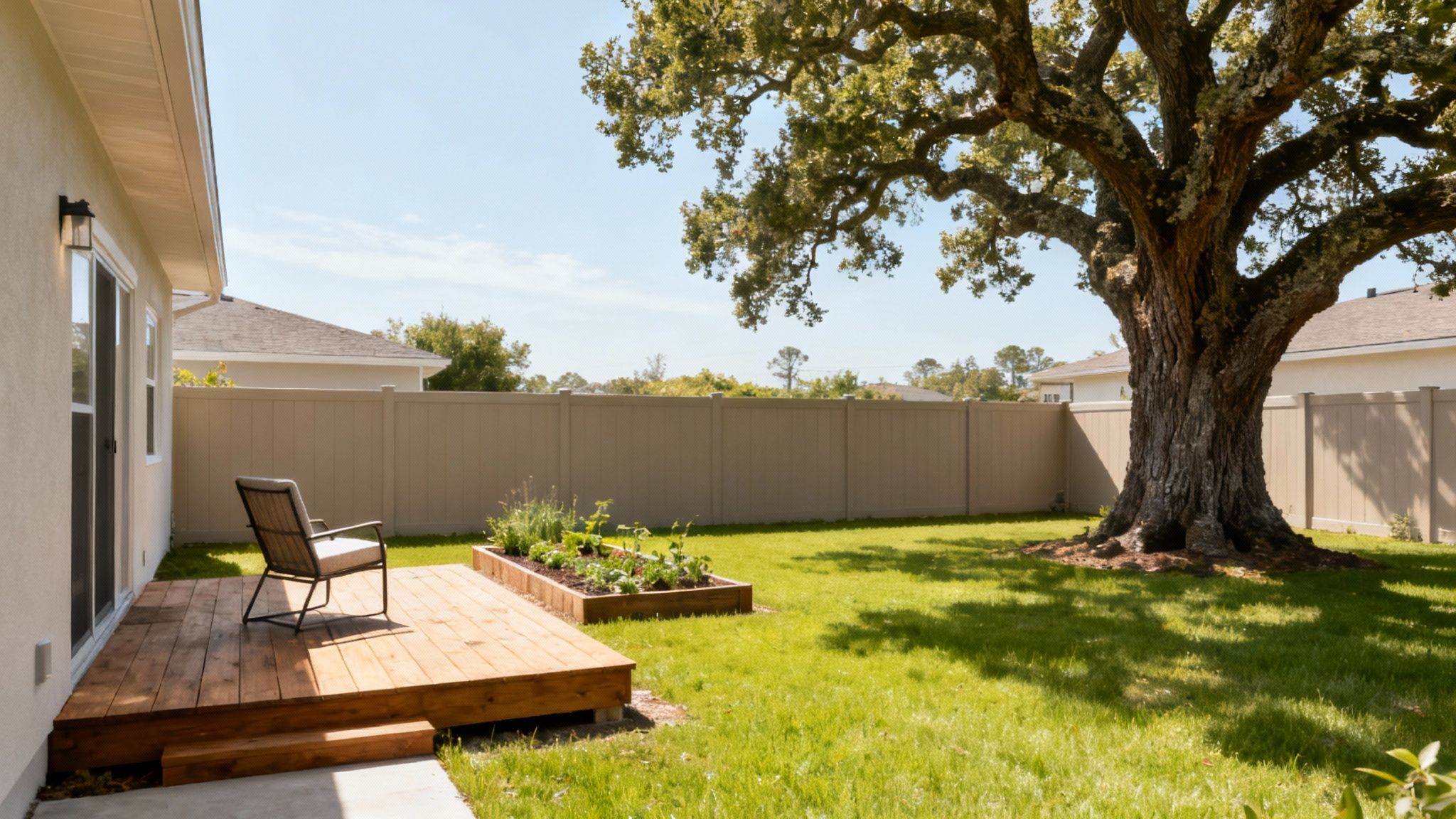
A family might prioritize a home in the Lower Mission with a large, flat backyard for the kids to play in. A couple downsizing to a condo in downtown Kelowna may look for a spacious, private balcony with lake views. And someone seeking a rural lifestyle in East Kelowna will focus on acreage with room for a large garden. Each scenario highlights how outdoor space directly supports a specific lifestyle.
How to Evaluate the Lot and Outdoor Features
Verify Boundaries and Size: Don't just estimate the lot size. Review the property's survey plan to understand the exact boundaries and identify any easements or right-of-ways that could affect your plans.
Assess Drainage and Grading: Look for signs of water pooling near the foundation. Proper grading should direct water away from the house. In hillside communities like West Kelowna, this is especially critical to prevent future issues.
Inspect Landscaping and Trees: Mature trees can add thousands of dollars in value, but unhealthy ones can be a liability. Consider the maintenance needs of the existing landscaping and budget for any changes you'd want to make.
Consider Future Potential: Check local zoning regulations. Could you add a deck, a garden suite, or a pool? Understanding the potential of the outdoor space is key to maximizing your investment and enjoyment of Kelowna real estate.
7. Market Conditions and Timing
Understanding what to look for when buying a house goes beyond the property itself; it includes the economic environment you're buying in. The Kelowna real estate market is dynamic, influenced by interest rates, inventory levels, and overall economic health. Grasping whether it's a buyer's or seller's market directly impacts your strategy, from your opening offer to your negotiating power.
The intense seller's market a few years ago in the Okanagan saw multiple-offer situations become standard. In contrast, periods with higher interest rates and more homes for sale can shift the advantage to buyers, creating opportunities for more measured decision-making and negotiation. Timing your purchase can significantly influence both the price you pay and your home's long-term appreciation potential.
How to Evaluate Market Conditions
Monitor local reports: Keep an eye on monthly statistics from real estate boards in the Okanagan. This data reveals trends in sales volume, average prices, and days on market for neighbourhoods like Rutland or the Mission.
Track interest rate trends: Changes announced by the Bank of Canada have a direct effect on your mortgage payments and buying power. Even small shifts can alter affordability.
Analyse inventory levels: A low supply of homes for sale in Kelowna typically creates upward pressure on prices, while a growing inventory can give buyers more choices and leverage.
Adopt a long-term perspective: Real estate is a long game. Aiming for a 5- to 10-year holding period helps you ride out the market's natural cycles, protecting your investment from short-term volatility. For a closer look at these dynamics, you can learn more about how to identify a buyer's or seller's market.
8. Future Development and Neighbourhood Growth
When you're considering what to look for when buying a house, it’s crucial to look beyond the property line and into the future. The home you buy today exists within a neighbourhood that will evolve. Understanding planned community developments in areas like Kelowna and West Kelowna is key to protecting and growing your investment.
Buying in an area like the Glenmore Highlands just before new schools and shopping centres are announced can lead to significant appreciation. Conversely, a quiet cul-de-sac could lose its appeal if a major highway extension is planned nearby. Being proactive and researching these plans ensures your home's location will continue to meet your lifestyle needs and financial goals for years to come.
How to Evaluate Future Growth
Check municipal plans: Visit the City of Kelowna's website to review the Official Community Plan (OCP) and 10-year development strategies. This reveals long-term intentions for residential, commercial, and transportation projects.
Review zoning meeting minutes: Local council meeting minutes are public record and provide a sneak peek into pending zoning changes or major permit applications that could transform a neighbourhood.
Identify growth corridors: Pay attention to areas with consistent new construction and public infrastructure investment, like the expansion of transit routes towards UBCO. These are often signs of a community on the rise.
Talk to a local expert: An experienced real estate agent who is deeply connected in the community, like AJ Hazzi and the team at Vantage West, will have insights into unpublicized developer plans and neighbourhood trends that you won't find online.
9. Energy Efficiency and Utility Costs
When you're considering what to look for when buying a house, energy efficiency is a crucial factor that directly impacts your wallet. A home's operating costs go far beyond the mortgage payment, and high utility bills in the Okanagan, with its hot summers and cold winters, can add significant monthly expenses. An energy-efficient home not only lowers your bills but also offers a more comfortable living environment.
For instance, an older home in Rutland might have single-pane windows and an outdated furnace, leading to surprisingly high heating costs. In contrast, a newer build in Kettle Valley might feature triple-pane windows, a high-efficiency heat pump, and superior insulation, keeping the home comfortable year-round while keeping utility bills low. These modern features can save hundreds of dollars annually, freeing up your budget for other things.
How to Evaluate a Home's Energy Efficiency
Request past utility bills: Ask the seller for the last 12 months of hydro and gas bills. This gives you a clear, real-world picture of the home's energy consumption and average monthly costs.
Check the major systems: Look at the age and condition of the furnace, air conditioner, and hot water tank. Check for Energy Star ratings on appliances, which signify superior efficiency.
Inspect windows and insulation: Look for double or triple-pane windows, which drastically reduce heat loss. Ask about the R-value of the insulation in the attic and walls, as this is key to maintaining a consistent indoor temperature.
Consider smart technology: Look for features like a smart thermostat, which can learn your habits and optimize heating and cooling schedules, often saving between $150 and $300 per year.
10. Natural Hazards and Environmental Risks
A critical part of knowing what to look for when buying a house is understanding the land it’s built on. The Okanagan's beautiful landscape also comes with unique environmental factors, from potential flooding near the lake to the very real risk of wildfires in our hillside communities. Assessing these risks isn't just about safety; it's about protecting your investment from high insurance costs and ensuring long-term peace of mind.
For instance, a home in a beautiful, forested area of West Kelowna might have a higher wildfire risk rating, which can significantly impact your insurance premiums. Similarly, a property in a low-lying area near Mission Creek could be in a designated flood plain, requiring specific and often costly insurance coverage. Being aware of these factors upfront is non-negotiable for making a smart purchase.
How to Evaluate Environmental Risks
Check Wildfire and Flood Maps: Review the City of Kelowna's official hazard maps. These resources show you which areas have higher exposure to wildfire interfaces or are located within historical flood plains.
Investigate Insurance Costs Early: Before you even make an offer, get insurance quotes for the property. A surprisingly high premium is often a red flag for underlying environmental risks.
Review the Property's History: Ask about any past events like water damage from spring runoff or proximity to previous fires. This information is crucial for understanding the property's resilience.
Look for Mitigation Efforts: Does the property have FireSmart landscaping or a sump pump installed? Seeing proactive measures taken by previous owners can be a positive sign that risks are being managed.
10 Key Home-Buying Factors Comparison
Location and Neighborhood Quality | Low–Moderate (research & visits) | Time for visits, local data; low direct cost | Long-term appreciation, better livability and resale | Primary determinant for homebuyers and investors | Strong appreciation, convenience, safety |
Structural Integrity and Home Inspection | Moderate (hire certified inspector) | Professional fees $300–$500; possible specialized tests | Identify defects, negotiating leverage, repair estimates | Pre-purchase due diligence, older properties | Risk reduction, safety assurance, cost avoidance |
Price, Affordability, and Financing Options | Moderate (financial analysis & lender shopping) | Down payment, closing costs, lender fees; time for quotes | Clear budget, stronger offers, payment planning | Budget-conscious buyers, first-time buyers using loans | Payment stability, purchase access, tax benefits |
Property Size, Layout, and Functionality | Low–Moderate (assessment; possible remodel) | Measurements, minor to major renovation costs | Improved daily livability and marketability | Growing families, those needing functional layouts | Better usability, adaptability, increased value |
Age of Home and Major System Replacements | Moderate (document review, inspections) | Potential major capital for roof/HVAC/plumbing replacements | Predictable maintenance schedule and replacement costs | Buyers of older homes; warranty-seeking buyers | Forecasted costs, modern-systems benefits, warranty coverage |
Outdoor Space, Lot Size, and Landscaping | Low–Moderate (site assessment, maintenance planning) | Landscaping/maintenance costs, possible permits | Enhanced lifestyle, outdoor use, potential value uplift | Families, gardeners, buyers wanting outdoor living | Privacy, recreation, expansion potential |
Market Conditions and Timing | Moderate (market analysis & monitoring) | Time to track reports; exposure to interest rate changes | Optimized negotiation and timing for appreciation | Investors and timing-sensitive buyers | Negotiating leverage, price opportunities |
Future Development and Neighborhood Growth | Moderate–High (zoning/plan research) | Time to review municipal plans; attend meetings; long horizon | Significant appreciation or temporary disruption | Long-term investors, buyers near planned infrastructure | High upside, improved infrastructure, job growth |
Energy Efficiency and Utility Costs | Low–Moderate (audit & upgrades) | Utility bill review; upgrade costs $5k–$50k; incentives available | Lower monthly costs, comfort, possible tax credits | Cost-conscious and eco-focused buyers | Reduced bills, comfort, resale appeal |
Natural Hazards and Environmental Risks | Moderate (risk mapping & testing) | Insurance premiums, mitigation/remediation costs, specialist reports | Risk mitigation, insurance planning, possible value adjustment | Buyers in hazard-prone areas, safety-focused investors | Informed pricing, preparedness, loss avoidance |
Making Your Next Move with Confidence
Buying a house is a huge deal, both financially and emotionally. As we’ve explored, the journey involves much more than just falling in love with a beautiful kitchen or a stunning lake view here in the Okanagan. It’s a detailed process of balancing location, structural integrity, financial readiness, and long-term lifestyle goals. Mastering what to look for when buying a house means you’re not just purchasing property; you’re investing in your future with clarity and foresight.
From scrutinizing the age of the roof and HVAC system to understanding the nuances of a neighbourhood's future development plans, each point on our checklist is a crucial piece of the puzzle. You’ve learned to look beyond the surface, considering practical elements like energy efficiency and environmental risks, which are real considerations in our beautiful valley. Thinking about how the layout works for your family today, and five years from now, ensures your home will serve you well for the long haul.
This comprehensive approach transforms a potentially overwhelming process into a structured, manageable one. It empowers you to ask the right questions, evaluate properties with a critical eye, and move forward on a home that truly fits your life. A successful purchase is about finding the right house for you—one where the strengths align with your priorities and the potential drawbacks are ones you can confidently manage. This diligence protects your investment and sets the stage for years of happy memories.
Navigating the Kelowna real estate market requires more than a checklist; it requires a deep understanding of local trends and a dedicated partner to guide you. That’s what we do. We help you assess market conditions, negotiate offers, and make a confident final decision. You’re not just buying a home; you’re building a life here in the Okanagan, and that journey should start on the strongest possible foundation.
If you’re thinking about buying or selling in Kelowna, Vantage West Realty can help you make your next move with confidence. With over 1,000 positive reviews, our team is known for accountability and results. Reach out to our team today and let's start the conversation.
Sell Your House With Vantage West Realty
Sell your home on your own time with the Vantage West Guaranteed Home Sale Program.
if your home doesn’t sell in a mutually agreed upon timeframe, we’ll provide you with a guaranteed written offer.