



What Credit Score is Needed for a Mortgage in Kelowna? (2025 Guide)

AJ Hazzi, REALTOR®
After becoming a Realtor® in 2002, AJ Hazzi noticed a gap in the real estate market...
After becoming a Realtor® in 2002, AJ Hazzi noticed a gap in the real estate market...
So, what's the magic number? When you're dreaming of buying a home in Kelowna, a credit score of 680 or higher is what opens the doors to the best rates from the big banks. But don't worry if you're not there yet—you can often still get a mortgage with a score as low as 620, especially for an insured mortgage. Your options and rates might just look a little different.
Your Quick Guide to Mortgage Credit Scores
Buying a home in the Okanagan is a massive step, and your credit score plays a huge part in making it happen. Think of it as your financial handshake—it gives lenders a quick snapshot of how you’ve handled debt in the past. It’s one of the very first things they’ll look at when you start the process of buying a home in Kelowna.
A strong score tells a lender you’re a reliable borrower, which can unlock better interest rates and save you thousands over the life of your loan. A lower score doesn't mean you're out of the game, not by a long shot. It just might mean working with a different type of lender or taking a few extra steps to strengthen your application.
It's all about understanding where you stand so you can plan your next move with confidence.
Understanding the Tiers
Canadian lenders generally group scores into a few key categories. Each tier gives them an idea of the risk involved and directly influences the kind of mortgage products they can offer you for your Okanagan real estate purchase.
Excellent (750+): You’re in the top tier. Lenders see you as a very low-risk borrower, and you’ll qualify for the most competitive interest rates and flexible terms for your dream home in the Okanagan.
Good (680-749): This is the sweet spot for most prime lenders, like the major banks. A score in this range makes you a strong candidate for a conventional mortgage with great rates.
Fair (620-679): You can definitely still get a mortgage, especially an insured one (where your down payment is less than 20%). You might face slightly higher interest rates or need to provide a few more supporting documents.
This image breaks down how lenders typically view these credit score ranges.
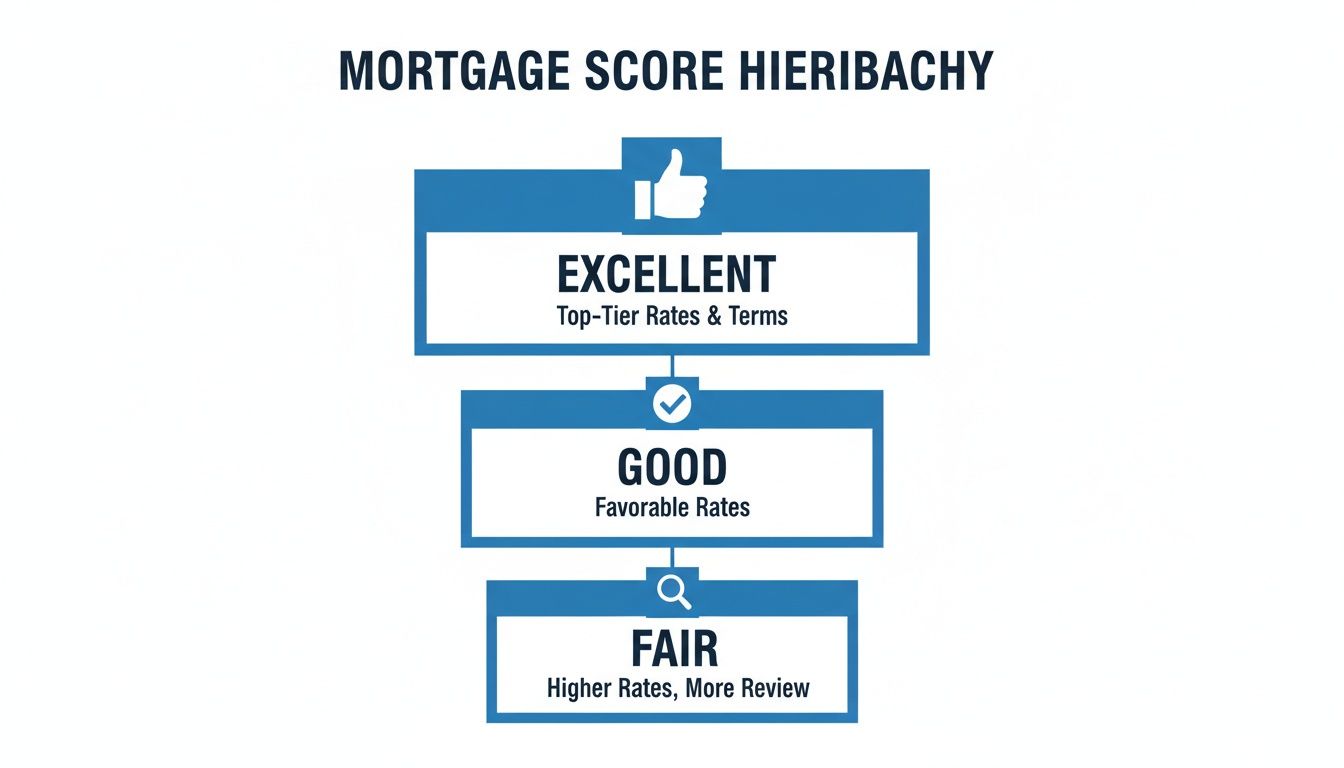
As you can see, a higher score makes you more attractive to lenders, which translates directly into better mortgage options and lower borrowing costs.
Why Your Credit Score Matters to Lenders
Think of your credit score as your financial handshake. It’s often the first thing a mortgage lender in Kelowna looks at to get a feel for your track record with money. In just three digits, that score tells a powerful story about how you've handled borrowing in the past.
For lenders, this number is a quick way to size up risk. A higher score suggests you’ve consistently managed your debts well, which makes you a reliable candidate for a big loan like a mortgage. In a competitive market like the Okanagan, lenders want to feel confident you'll make your payments on time, every time. This "trust score" is crucial.
But your score does more than just get you a yes or no—it directly shapes the financial terms of your mortgage.
How Lenders Use Your Score
When a lender pulls your credit report, they're looking for patterns. That number helps them decide on several key things that will impact your home-buying power for years to come.
Here’s what your score helps determine:
Your Interest Rate: This is the big one. A higher credit score almost always unlocks lower interest rates. Even a tiny difference in your rate can save you tens of thousands of dollars over the life of your mortgage on a Kelowna home.
The Loan Amount: Lenders use your score, along with your income and other debts, to figure out how much they're comfortable lending you. A stronger score can boost your borrowing capacity, opening up more options in neighbourhoods from West Kelowna to Penticton.
Available Mortgage Products: Not all mortgages are created equal, and the best ones are reserved for the best borrowers. Prime lenders keep their most flexible and favourable products for applicants with strong credit profiles.
Your credit score is a powerful tool on your home-buying journey. It communicates your financial reliability to lenders, shaping the cost and type of mortgage you can secure for your future home in the Okanagan.
Ultimately, seeing your credit score from a lender's perspective helps you understand its true power. It's a snapshot of your financial habits that can either open doors to better deals or add hurdles to your path. By getting a handle on its importance, you're in a much better position to tackle one of the biggest financial decisions you'll ever make.
The Specific Numbers Lenders Look For
Okay, let's get down to the brass tacks. When you're dreaming of buying a home here in the Okanagan, you need to know the actual credit score benchmarks lenders are looking at. You just need to hit the right targets to open up the best mortgage options for you.
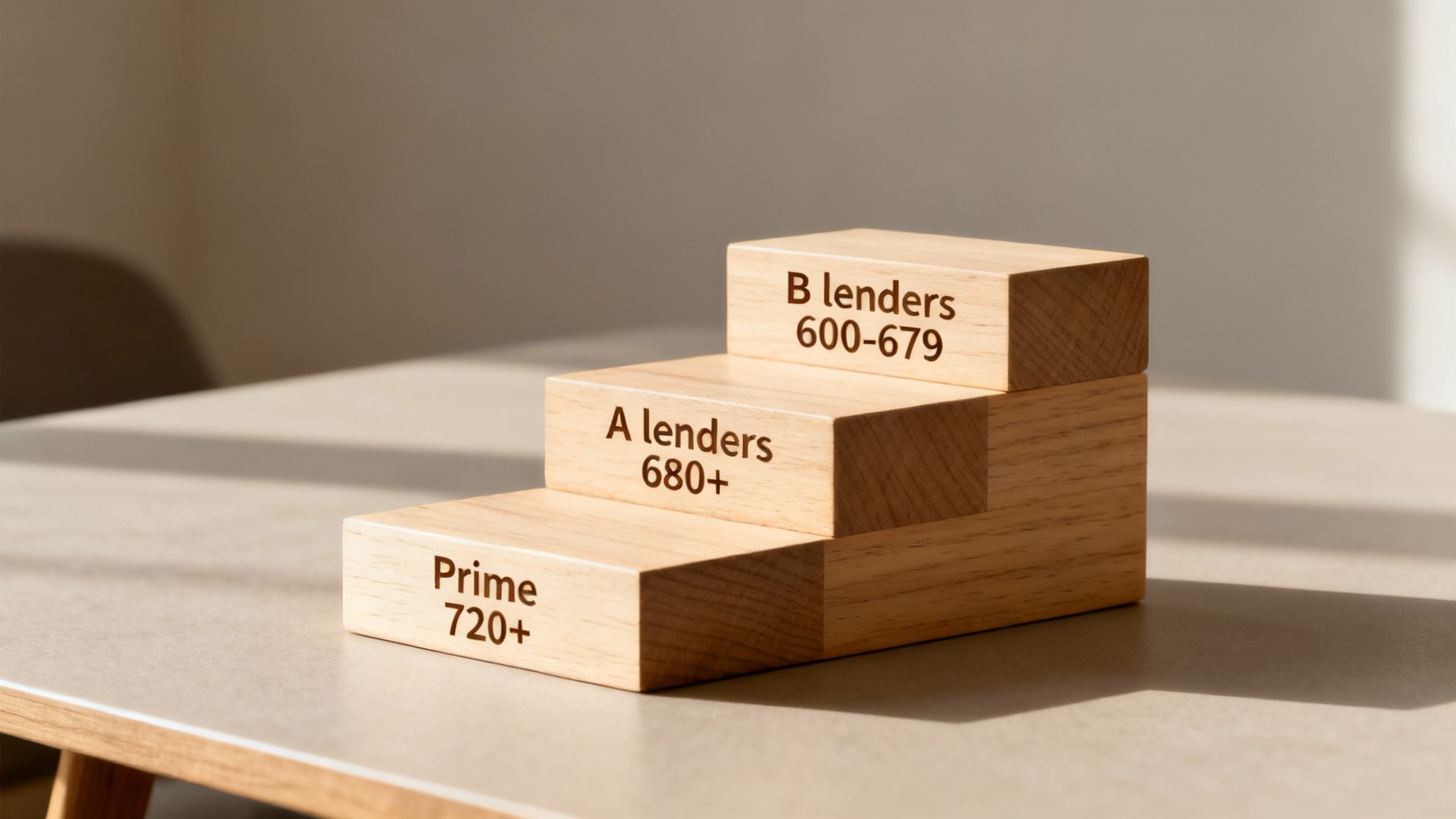
In Canada, the magic number that really puts you in the driver’s seat is generally 680. A score above this benchmark makes you an ideal client for an 'A' lender. Think of the big banks and major financial institutions—they see you as a reliable borrower. This means you’ll get access to the best interest rates and most flexible terms for that perfect family home in the Upper Mission or a quiet condo in Pandosy.
What If Your Score Is Below 680?
If your score lands somewhere between 600 and 679, don't panic. You absolutely still have a path to homeownership in Kelowna. This range just means you'll likely be working with what are known as 'B' lenders or alternative financial institutions.
These lenders specialize in helping people who might not quite fit the strict criteria of the big banks. The trade-off is usually a slightly higher interest rate or different terms, but they provide a crucial service for many aspiring homeowners. We can help you navigate these options to find a solution that works for you.
The difference of even 50 points on your credit score can have a huge financial impact. A higher score could save you thousands—or even tens of thousands—of dollars in interest over the life of your mortgage.
A Real-World Kelowna Example
Let’s put this into perspective. Imagine two families are looking to buy a townhome in Glenmore for around $700,000.
Family A has a solid credit score of 720. They easily get approved for a prime mortgage with a fantastic rate from a major bank.
Family B has a score of 640. They still secure a mortgage, but it's through a B-lender, and their interest rate is half a percentage point higher.
That small difference might not sound like much, but it could mean Family B pays an extra $200 per month. Over a five-year mortgage term, that adds up to $12,000. And over the entire 25-year life of the loan? It's a staggering $60,000 difference.
This really shows why understanding what credit score is needed for a mortgage is so critical for your long-term financial health. A little bit of work on your credit now can pay massive dividends down the road.
How Lenders See Beyond Your Credit Score
Your credit score is the headliner, but it’s not the whole show. When you're looking to buy a home in Kelowna, lenders are trying to get a feel for your complete financial story. That three-digit number is a big part of it, but other factors can paint a much fuller, more compelling picture of you as a borrower.
Think of it like this: your mortgage application is a puzzle. Your score is one important piece, but lenders need to see how all the other pieces fit together before they feel confident.
The Other Key Players in Your Application
Beyond that single number, what lenders really care about is your ability to consistently handle mortgage payments month after month. To figure that out, they dig into a few key areas to assess your overall financial health.
These are the elements that can really strengthen your case:
Income and Employment Stability: A steady job with a reliable income is huge. Lenders in the Okanagan want to see a consistent history of employment. It shows them you have a dependable source of funds to cover your monthly payments.
Your Down Payment: Putting more money down is one of the best ways to reduce a lender's risk. If you can put down more than the minimum, it shows serious financial discipline and gives them more security. This can sometimes help balance out a credit score that’s on the lower end.
Debt-to-Income (DTI) Ratio: This one is a big deal. Lenders calculate your DTI by dividing your total monthly debt payments (car loans, credit cards, etc.) by your gross monthly income. A lower DTI shows you aren't overextended and have plenty of breathing room in your budget for a mortgage. We get into the nitty-gritty of how this works in our guide on understanding the mortgage stress test.
Your application tells a story, not just a number. A strong income, low debt, and a solid down payment can make you a very attractive borrower, even if your credit score isn't perfect.
A West Kelowna Success Story
We recently worked with a client who was ready to buy their first home in West Kelowna. Their credit score was in the low 600s, which was causing them a fair bit of stress.
But their story didn’t end there. They had worked at the same local company for over a decade, had almost no other debt, and had diligently saved up a down payment that was larger than required.
Because of these strong points, we connected them with a lender who looked beyond the score. They saw a reliable borrower with a proven track record of financial responsibility. The result? They secured a great mortgage and are now happily settled in their new home. It just goes to show that a holistic view makes all the difference.
What If My Credit Score Isn't Perfect?
If your credit score isn’t quite where you want it to be, don’t panic. Getting a mortgage for a beautiful home in Penticton or Vernon is still absolutely on the table. Think of a lower score as a hurdle, not a roadblock—and there are proven strategies to get you over it.
One of the most common paths forward is an insured mortgage. If your down payment is less than 20% of the home's price, your mortgage has to be insured by an organization like the Canada Mortgage and Housing Corporation (CMHC). This insurance protects the lender if a borrower defaults, which in turn makes them more willing to be flexible on credit score requirements.
Exploring Your Options
When your score dips below the 680 benchmark that 'A' lenders typically look for, we just start exploring a different set of solutions. It's all about understanding the pros and cons of each route.
Here are your main options:
Insured Mortgages: As we just covered, these can offer a lot more leeway. Lenders feel more secure, making this a fantastic option for many first-time buyers in the Okanagan.
Alternative Lenders (B-Lenders): These lenders specialize in helping people who don't quite fit the rigid criteria of the big banks. They take a more holistic look at your entire financial picture and can be an amazing resource.
Private Lenders: This is typically a short-term strategy. You might use a private loan to secure a property now, giving you time to improve your credit so you can qualify for a traditional mortgage down the road.
A lower credit score doesn’t close the door on homeownership; it just means we need to open a different one. With the right strategy, you can still successfully compete for homes in the Okanagan real estate market.
Navigating these different lending streams can feel complicated, and that's exactly why working with a professional is so critical. We can help you understand the nuances and find the right fit. To get a better sense of your options, check out our guide on choosing between a mortgage broker and a bank.
Simple Steps To Boost Your Credit Score
Ready to take control? Improving your credit score is one of the most powerful things you can do to strengthen your home-buying prospects in the Okanagan. It’s about making small, consistent moves that show lenders you’re a reliable borrower.
Think of it as polishing your financial resume before the big interview. Even a modest bump in your score can open doors to better mortgage rates, potentially saving you thousands of dollars over the life of your loan. The best part? You can start making a real difference right now with a few simple, effective strategies.
Your Credit-Boosting Checklist
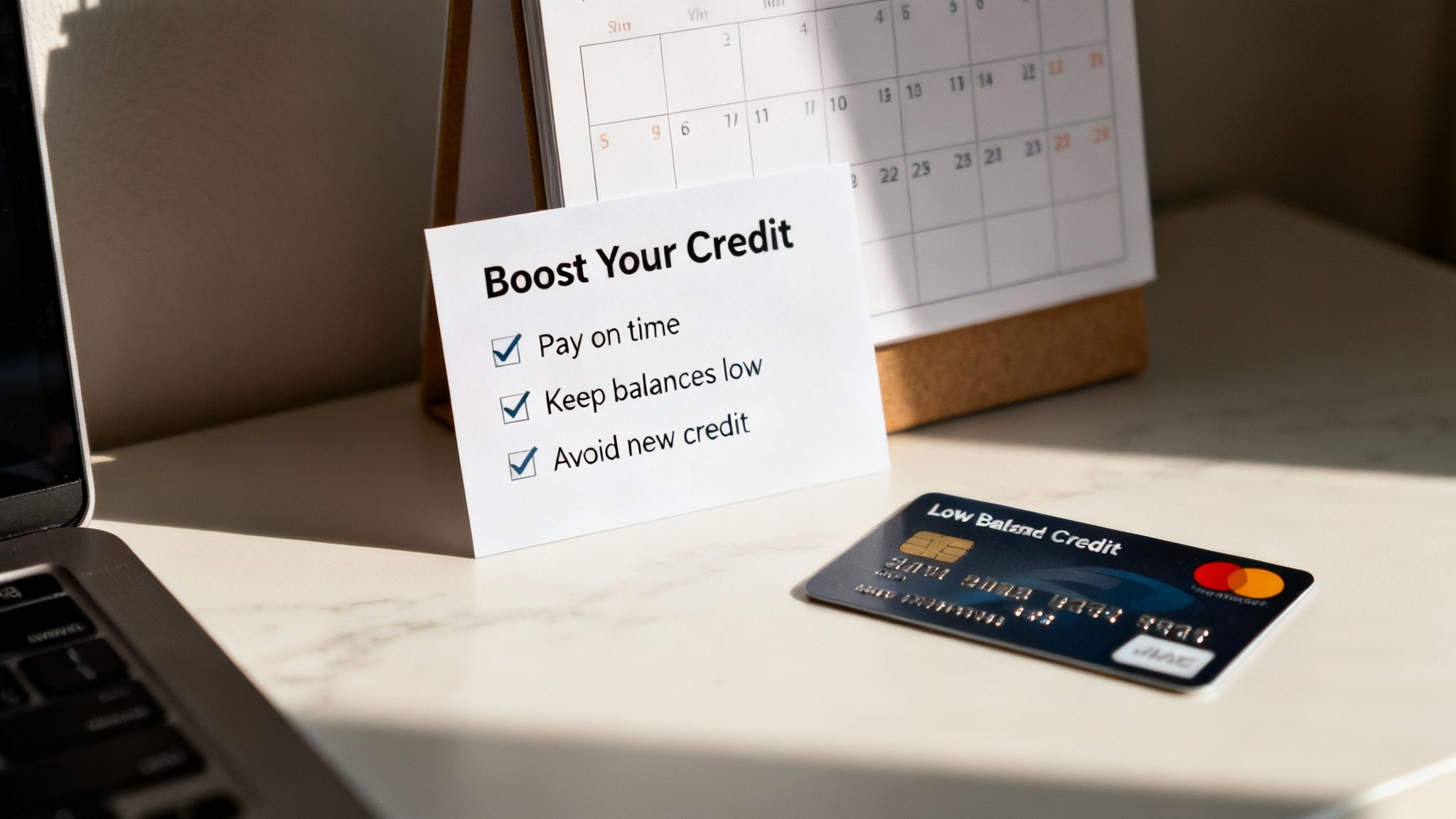
Here are the three most impactful actions you can take to see that score climb. If you want the biggest bang for your buck, focus your energy here.
Pay Every Single Bill on Time: This is the heavyweight champion of all credit score factors. Your payment history makes up the largest slice of your score, so even one late payment can set you back significantly. The easiest way to nail this is to set up automatic payments for all your bills—set it and forget it.
Keep Credit Card Balances Low: Lenders pay close attention to your credit utilization ratio—that’s just a fancy term for how much credit you're using compared to your total limit. A great rule of thumb is to keep your balance on each card below 30% of its limit. So, if you have a card with a $10,000 limit, you’ll want to keep the balance under $3,000.
Avoid Opening Too Much New Credit: Every time you apply for a new credit card, car loan, or line of credit, it triggers a "hard inquiry" on your report. Each one can cause a temporary dip in your score. When you’re gearing up to buy a home, it’s wise to hit pause on any new credit applications for at least six months beforehand.
Small, consistent actions are the absolute key to building a stronger credit score. A simple six-month plan focused on nothing more than on-time payments and low balances can lead to significant score increases, putting you in a much better position to secure a mortgage for your Okanagan dream home.
Common Questions About Credit Scores And Mortgages
We’ve guided thousands of clients through the Kelowna home buying process, and a few key questions about credit scores pop up all the time. Getting clear, direct answers can make all the difference, so here are the most common things we hear from buyers just like you.
Does Checking My Own Credit Score Lower It?
Not at all. Checking your own score is considered a ‘soft inquiry’ and has zero impact on your credit rating. Go ahead and check it as often as you like using services like Credit Karma or Borrowell.
A ‘hard inquiry,’ on the other hand, happens when a lender pulls your credit for an application (like for a mortgage or credit card). This can temporarily lower your score by a few points, which is why you don't want to apply for a bunch of new credit right before a mortgage application.
Can I Get A Mortgage With My Partner If They Have Bad Credit?
Yes, this is definitely possible, so don't count yourselves out. When you apply for a mortgage together, lenders will look at both of your financial situations.
The stronger applicant's profile, including their income and credit history, can help balance out the weaker one's. That said, the lower credit score will be a significant factor in the decision. Your best bet is always to chat with a mortgage professional about your specific circumstances to create a solid plan.
How Long Does It Take To Improve My Credit Score?
You can start seeing positive changes in your credit score within a few months of practicing good habits, like making all your payments on time and lowering your credit card balances.
However, making a significant leap that moves you into a new lending tier—say, from the low 600s to over 680—can often take six months to a year or more. Consistency is absolutely the key here; there are no overnight fixes, but steady effort pays off.
If you’re thinking about buying or selling in Kelowna, Vantage West Realty can help you make your next move with confidence. Reach out today.
Sell Your House With Vantage West Realty
Sell your home on your own time with the Vantage West Guaranteed Home Sale Program.
if your home doesn’t sell in a mutually agreed upon timeframe, we’ll provide you with a guaranteed written offer.